| 學校 |
作者 |
名稱 |
| 道明中學 |
許〇縈 |
A Long Walk to Water
【書籍介紹】
書名/A Long Walk to Water 推薦者/道明中學‧許〇縈內容簡介:
|
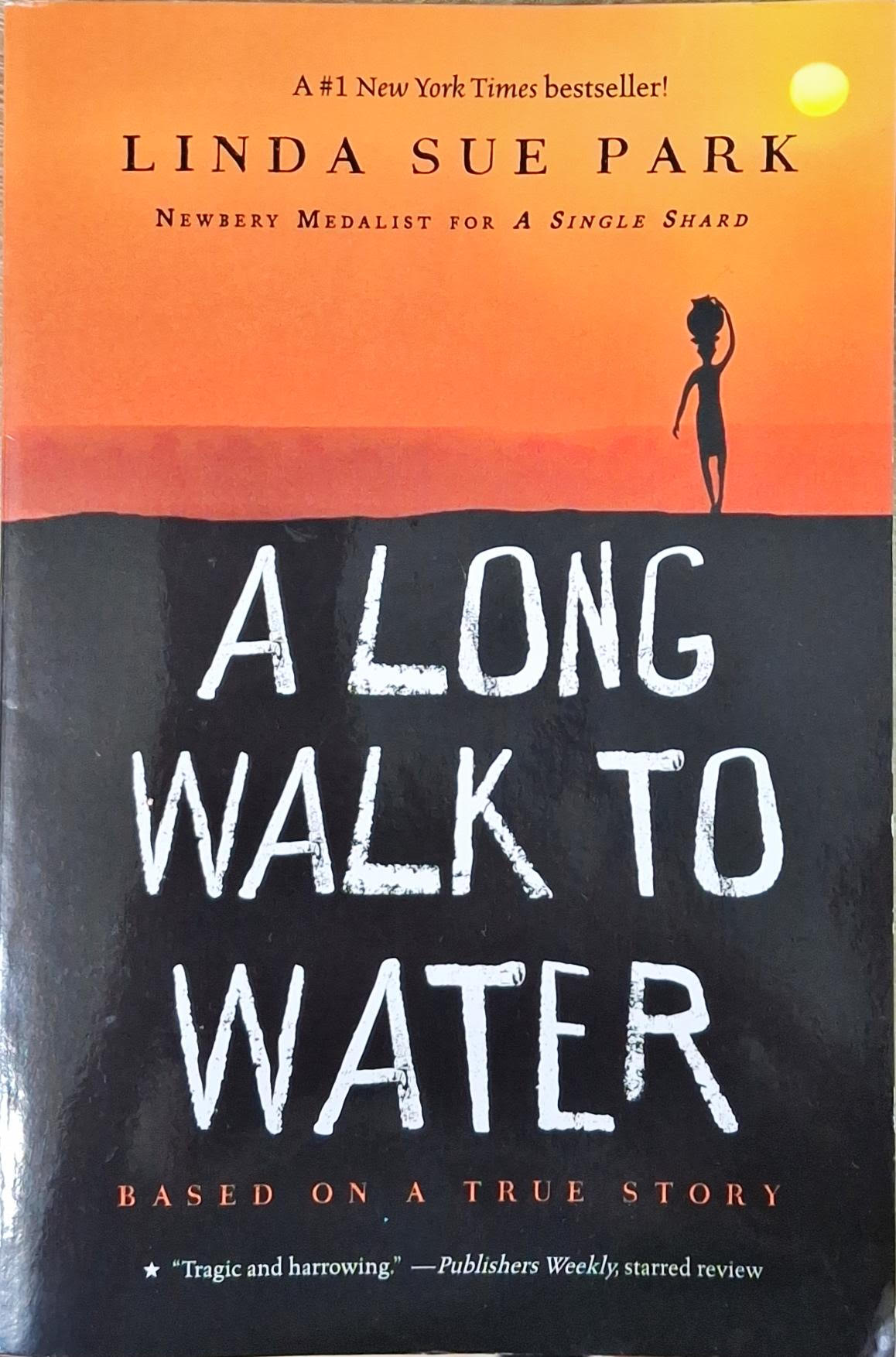 |
A Long Walk to Water by Linda Sue Park takes place in two different time periods with two different protagonists. The novel weaves together interlaced narratives set in Sudan, where both characters face the same misfortune: wars that destroyed their country.
In 1985, Salva was an eleven-year-old boy from the Dinka tribe. One day during school, war reached his village. He was separated from his family and became one of the “Lost Boys of Sudan.” Salva began his journey to escape the war. During the war, He crossed harsh terrain, through threats of starvation, lions, and armed conflict. In the end, he survived and eventually found shelter in a refugee camp before resettling in the United States, a journey that took him more than ten years. The other character in the novel, Nya, lived in a remote South Sudanese village and faced severe water scarcity. She walked for hours every day to fetch water from a polluted pond just to sustain her family. Years later, a well was drilled near her village, bringing clean water and a school to the community. At the end of the story, Nya meets Salva, bridging the time as well as tribal divisions. As one sentence in the story says: “Different tribes, always fighting. But the Dinka man, Salva Dut, brought us water.”
After reading A Long Walk to Water, I felt that I had delved into two disparate yet deeply connected lives, tied together by the essential human need for water as well as for hope. The characters overcame difficulties and used their strength to help more people.
The most memorable part of this book is its denouement. Though they belonged to different tribes, Salva still lent a helping hand without hesitation. It is not just a story of survival; it is a narrative of transformation and shared responsibility. It inspired me to believe that collective effort, compassion, and hope can indeed create change—even in the most harrowing circumstances. It also made me reflect on empathy: What would I do if my enemies needed help? Would I try to help them, or turn a blind eye?
“They will come and drill a well. Then your family will no longer have to drink the dirty water from the pond.” — This is one of my favorite sentences in the novel. These are not luxurious words, but they express the deep hope of people living in war-torn areas. For me, this line is more than just about clean water; it is a promise of change, dignity, and opportunity.
|
| 瑞祥高中 |
杜〇軒 |
How to Be a Woman
【書籍介紹】
書名/How to Be a Woman推薦者/瑞祥高中‧杜〇軒內容簡介:
|
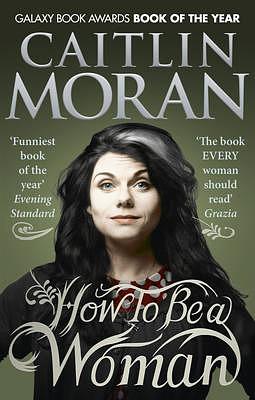 |
"How to Be a Woman" is a funny, honest, and powerful book written by British journalist and author Caitlin Moran. In the book, she shares true stories of her own life, starting from the time when she was a teenager growing up in a big, chaotic family. She talks about the many things that women need to go through — from body image and beauty standards to love, sex, work, family, and becoming a mother.
What makes the book stand out is how Moran uses humor to talk about serious and sometimes uncomfortable topics. She discusses feminism in a way that is easy to understand and relatable. For her, being a feminist simply means believing that men and women should be treated equally — nothing more, nothing less. She also questions the pressure women face to behave or look in a certain way, and the reason why society expects women to remain silent about their own needs and experiences.
The book is both memoir and social commentary. It’s very personal, but it also deals with bigger issues about how women are seen and treated in the world. Moran is bold, honest, and unafraid to say what many people are thinking but in their hearts.
Overall, "How to Be a Woman" is not just for women — it’s for anyone who wants to better understand gender, identity, and equality.There issue,are all told with humor and sincenty.
Actually, when I first found out that our summer homework had to be based on an English book, I had no idea where to start. It wasn’t because English isn’t my first language,but knowing which book to choose.
Therefore, I look for recommendations online,typing keywords such as simple, meaningful, and easy to understand. Then I found "How to Be a Woman" by Caitlin Moran.
As soon as I saw the title and read the book’s blurb, I immediately knew it would be perfect for my homework. What truly inspired my choice, though, was a movie our civics teacher showed us a few weeks ago—"On the Basis of Sex". That film makes me even more interested in law and motivational stories about women, and I want to explore more about women’s rights.
This book doesn’t feel too heavy or serious. Instead, it uses dark humor to discuss feminism, which helped me reflect on what it truly means to be a woman and how to face life’s challenges. One line from the book really resonates with me:
“And, like all the best quests, in the end, I did it all for a girl: me.”
|
| 道明中學 |
呂〇臻 |
Grandpa's Great Escpae
【書籍介紹】
書名/Grandpa's Great Escpae推薦者/道明中學‧呂〇臻內容簡介:
|
 |
<內容簡介>
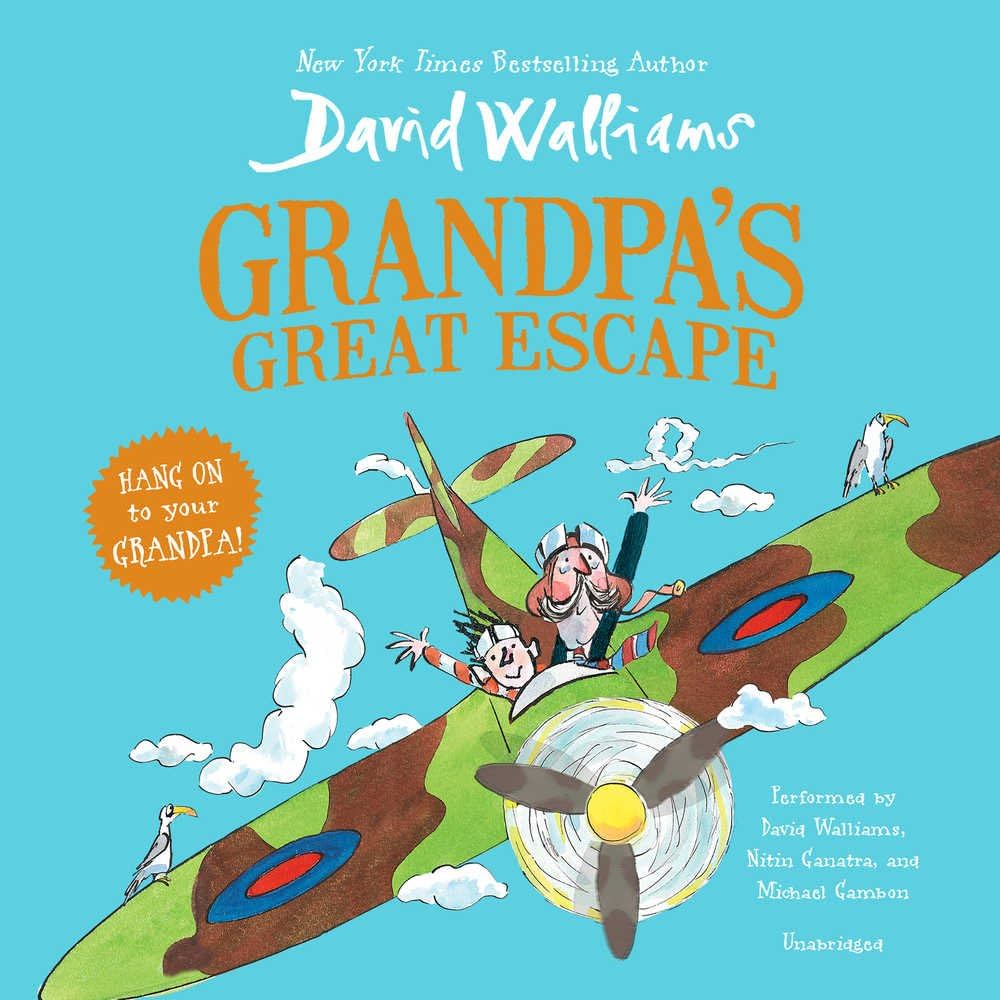
Grandpa’s Great Escape was written by David Walliams and first published in the UK in 2015, with illustrations by Tony Ross. Walliams wrote this novel to raise public awareness of Alzheimer’s disease and to show dignity in aging.
This story is about a boy named Jack and his beloved grandpa, who was once a World War II Spitfire pilot in the Royal Air Force. Despite his honorable past, Jack’s grandpa suffers from Alzheimer’s disease, which makes him confused about the present and the past. For example, he likes to climb to high places to see if there are any German enemies, or even imagines himself flying a Spitfire plane. Grandpa also had an ancient wooden record player which he would play booming orchestral music within the loudest volume. Old armchairs would turn into his cockpit, up and away as he settled.
At first, Grandpa lived alone in a small flat. As he grew older, his symptoms worsened day by day. Jack’s parents then intended to send him to “Twilight Towers,” a grim and suspicious nursing home run by Matron Swine. Matron claimed that it was a wonderful place to look after the elderly, but in reality, it was almost like a prison. Jack clearly knew this wasn’t the solution, so he strongly rejected sending his grandpa to that unforgiving place. He insisted that Grandpa could stay with him in his bedroom instead of going to the Towers. Although this idea worked for a day, Grandpa still found a way to sneak out of Jack’s room. Soon after, Grandpa was sent straight to the Towers. Upon arriving there, things began to seem strange: men dressed up as female nurses, strange pills that acted like hypnotics, Matron forging documents, and more. It became obvious that the families who sent their elderly there had been deceived.
Not long after, Jack and Grandpa came up with escape plans. The first plan failed when Nurse Rose and Nurse Blossom picked Grandpa up by his ankles, dangled him upside down, and marched him back into the building. Their second attempt succeeded when they managed to slip out inside a coffin. After this daring escape, they went to an old RAF museum and stole a Spitfire fighter plane which had no fuel, so they even drove it to a gas station to get some petrol. In no time, the police chased after and surrounded them. In order to escape, Grandpa and Jack took off into the sky. Eventually, Grandpa’s health declined, and the flight became his last great adventure. He dropped Jack out of the plane and gave him one final salute. In the end, Jack landed unharmed in the gardens of Buckingham Palace, while Grandpa left the world with dignity, freedom, and joy.
Late night in bed, in the place between awake and asleep. Jack suddenly heard a far-off sound. He opened his eyes, and slid down from the top bunk. Sneaked to the window and pulled back the curtains, there was a spitfire dancing in the air. “Grandpa?!’’exclaimed Jack. There in the cockpit sat Wing Commander Bunting. The person looks exactly the same as the photograph hung above Jack’s head, the one taken in 1940 when grandpa was a young pilot. He was young again. This situation repeated. Grandpa was right, as long as Jack loved him, he would never die.
<讀後心得>
This story reminds me of my own grandpa, who was once a tow truck driver. He has often shared with me his personal experiences and unforgettable memories over decades of labor. Just like Jack, I am deeply interested in listening to my grandfather’s stories of his glorious old days. During my childhood, he took me everywhere with him. One of the most unforgettable moments was when he brought me to visit his longtime friend, who was also a tow truck driver. Grandpa carefully helped me climb into the truck and began proudly showing me the many tasks and techniques he had mastered over more than four decades. For me, witnessing his world was truly mind-blowing, and these moments became cherished memories that continue to inspire me.
Even now, in the present, my grandpa plays an important role in my life. As I am turning eighteen soon and gradually preparing to obtain my driver’s license, he often invites me to join him so that he can tutor me patiently in the driving techniques that a skillful driver must acquire. Through his guidance, I not only gain practical skills but also feel a deep sense of pride in having such a grandparent who continues to support me with wisdom and care.
To sum up, the interactions between family members in the story strongly reflect the patterns and dynamics of family life that can be found in many households around the world. Yet, what attracts me most is not simply the general family resemblance but the special, tender, and heroic relationship between Jack and his grandpa. Their relationship resonates deeply with me because it mirrors the relationship I share with my own grandfather. To me, he is not only a role model but also a true hero.
|
| 楠梓高中 |
倪〇庭 |
Hocus Pocus Hotel
【書籍介紹】
書名/Hocus Pocus Hotel推薦者/楠梓高中‧倪〇庭內容簡介:
|
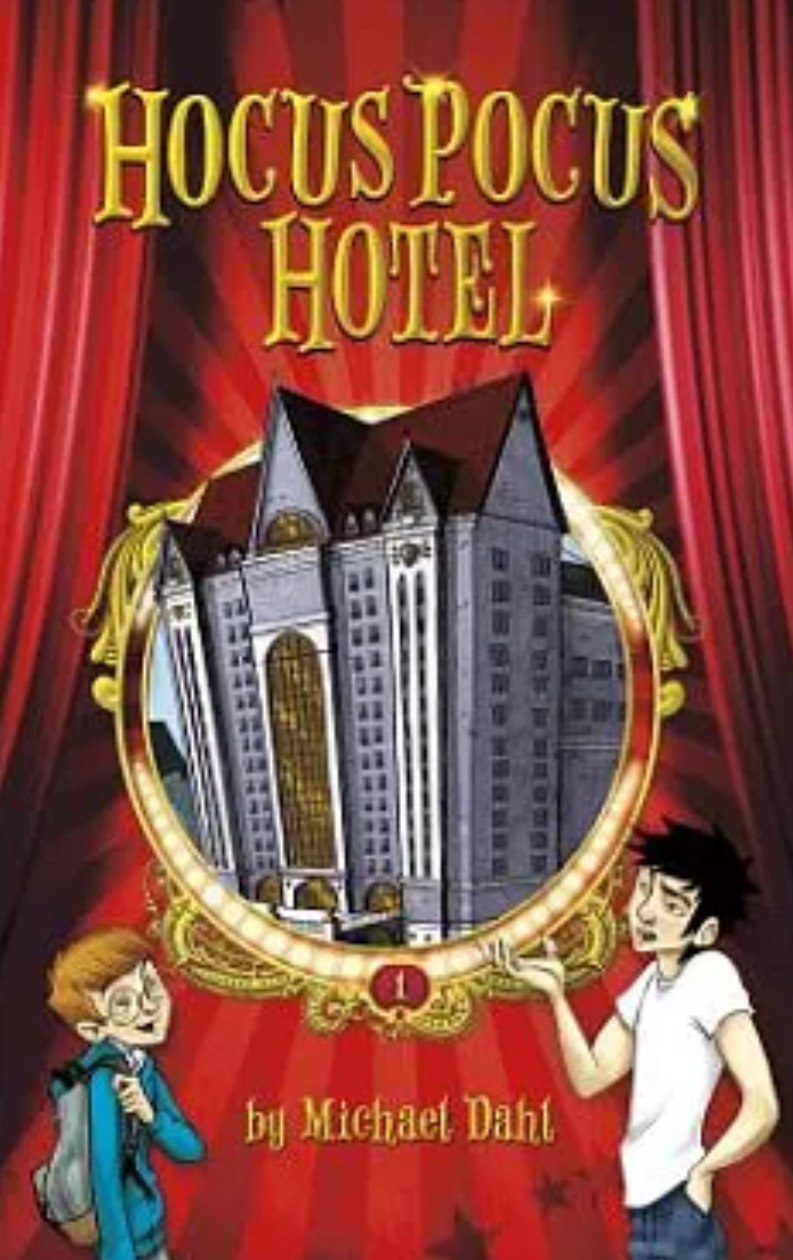 |
Hocus Pocus Hotel is a fascinating children’s book filled with mystery, teamwork, and adventure. The story takes place in a giant and ancient hotel called Abracadabra. This hotel is famous as a secret meeting place for talented magicians, and there magicals make it a unique location full of history and wonder. Because of its magical past, the hotel has strange features like secret passageways, specially designed rooms, and puzzling traps. These magical secrets eventually lead the main characters to explore the mysteries which are hidden throughout the hotel. This book brilliantly combines the excitement of magic with the logical and detective work, which created not simply entertaining but challenging reading experience.
One of the greatest features of the book is how it transforms supernatural mysteries into logical explanations. For instance, if a person seems to disappear into thin air, the explanation is likely a cleverly hidden passage. On the other hand ,if an object suddenly vanishes, it may turn out to be part of a magician’s perfectly timed sleight-of-hand trick. These clever ideas make the story surprising and encourage readers to think critically about events that may initially seem unbelievable; they always hide a reasonable explanation. The author uses every puzzle to remind readers that things are not always as what they appear to be and teach them an important life lesson: people should not take everything at face value. By questioning appearances, we can discover the truth hidden beneath. This message not only adds an educational value to the story but also enriches the mystery by blending fun surprises with deeper meaning.
Another theme explored in the book is the importance of friendship and teamwork, which is shown through the main characters, Charlie Hitchcock and Tyler Yu. In the very beginning, Charlie and Tyler hardly seem like they would work well together. Charlie is sharp, observant, and has strong logical thinking skills, but he is not very confident. Tyler, on the other hand, is brave and fearless but tends to rush into situations without thinking them through. Their personalities are almost opposite, making teamwork between them seem unlikely at first. However, as they face challenges together and solve mysteries, they begin to trust each other, understand one another’s strengths, and overcome their weaknesses. This friendship is built through experiences shared both in solving puzzles and exploring the strange mysteries of the hotel. The author cleverly shows that collaboration and partnership are essential for solving complicated problems. Courage alone is not enough, nor is intelligence. Only when the two work together can they achieve their goals. This theme of teamwork makes the book relatable and inspiring for readers, who can apply the lessons in their own friendships or working relationships.
Additionally, the magical hotel itself acts as a stage for learning and discovery. The mysterious setting turns a simple story into an exciting adventure, where logic merges seamlessly with illusion, and courage is tested against disbelief. The setting emphasizes the duality between curiosity and caution, allowing readers to experience both amazement and practical reasoning at the same time. Every room and passageway in the hotel brings unique challenges, making readers feel as if they, too, are solving puzzles alongside the characters. This clever design of the setting encourages readers to put themselves in Charlie and Tyler’s shoes, stimulating their curiosity and enhancing their problem-solving skills as they discover the truth behind each situation.
Overall, Hocus Pocus Hotel is more than a typical detective or mystery book—it is a tool for teaching lessons that readers can carry with them into their everyday lives. It entertains readers with fascinating mysteries, but it also leaves readers with meaningful teachings about observation, questioning, teamwork, and logic. In my opinion, this book is suitable for readers of all ages—not just children, but also teens and adults. It is rare for a book to combine fun entertainment with deep life lessons so effectively. After finishing this story, I found myself paying closer attention to details around me, questioning things that seemed unusual, and appreciating the value of collaborative teamwork. This book serves as a reminder to think critically, trust friends, and believe in the power of shared strength and mutual support. I would recommend Hocus Pocus Hotel to anyone looking for an exciting story with both mystery and meaning.
|
| 高雄市立仁武高級中學 |
吳〇芳 |
The Hundred Dresses
【書籍介紹】
書名/The Hundred Dresses推薦者/高雄市立仁武高級中學‧吳〇芳內容簡介:
|
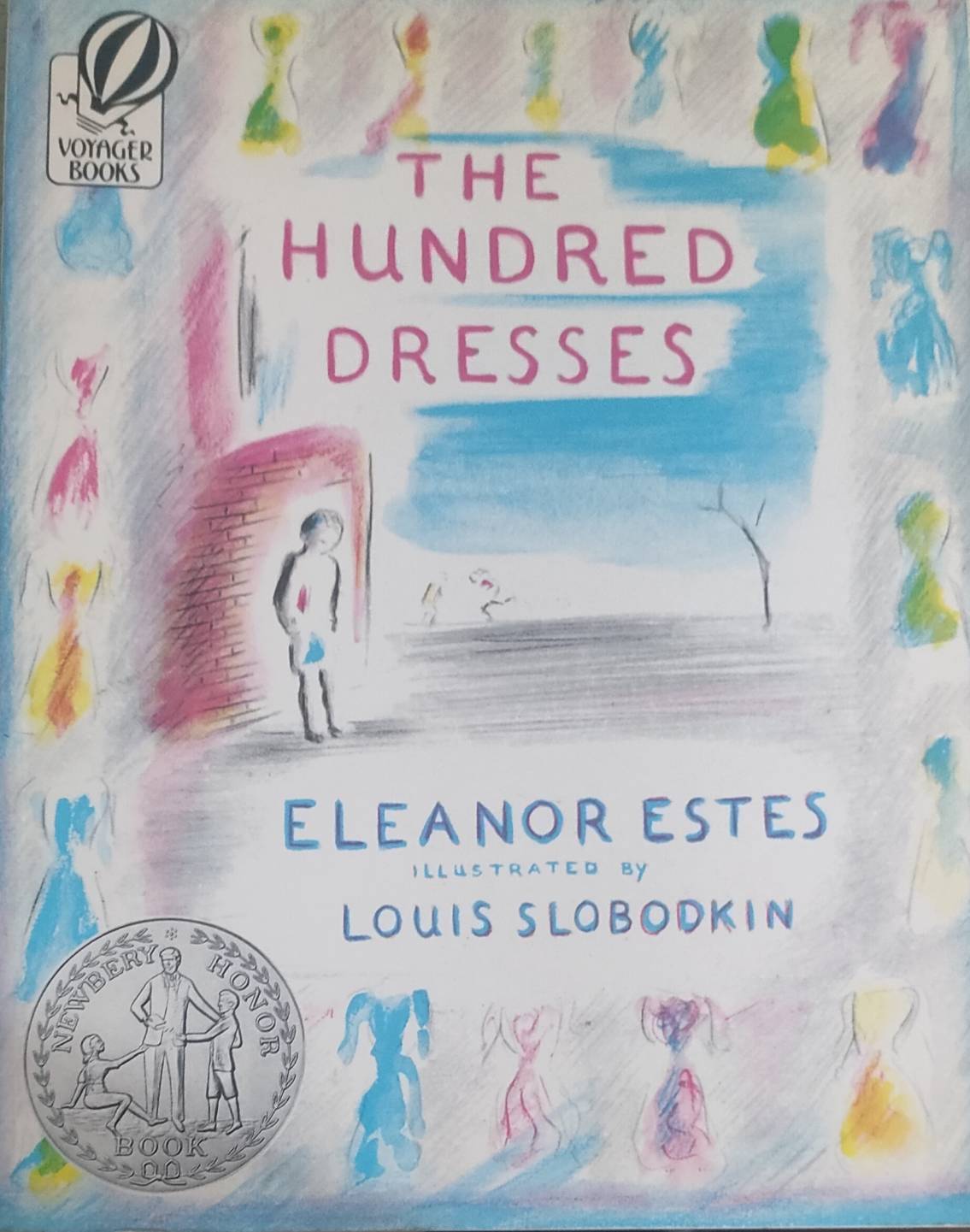 |
When I first picked up "The Hundred Dresses" by Eleanor Estes, I expected a simple children’s story about school life. Instead, I discovered a profound tale that explores kindness, cruelty, regret, and forgiveness. The book tells the story of three girls—Wanda, Peggy, and Maddie—and through their interactions, it reflects deeper social problems such as bullying, poverty, and prejudice.
At the center of the story is Wanda, a quiet girl of Polish descent who wears the same faded blue dress to school every day. Because of her appearance and foreign background, she becomes the target of her classmates’ ridicule. When she claims to own one hundred dresses, the others laugh at her. To them, it sounds absurd, since she never wears anything but the same old blue dress. They quickly assume she is lying and dismiss her without giving her a chance to prove herself.
Peggy, one of the most popular girls, often teases Wanda not out of deep cruelty, but out of thoughtlessness and amusement. Maddie, Peggy’s close friend, feels uneasy each time but remains silent. Though she sympathizes with Wanda, she fears losing Peggy’s friendship and becoming the next target. As the story shows, this silence proves just as harmful as the bullying itself.
The turning point comes with the school drawing competition. No one expects Wanda to win, but her entry astonishes the entire class. She submits one hundred beautifully detailed drawings of dresses, each unique, imaginative, and elegant. Her classmates are stunned by her talent, and the truth is revealed: Wanda wasn’t lying after all. She does “own” one hundred dresses, though not in her closet but in her art.
This revelation is a powerful moment, both for the characters and for the readers. Peggy and Maddie suddenly realize their mistake and are overcome with guilt for the way they treated Wanda. They try to make amends by writing her a letter of apology and congratulations. However, before their message reaches her, they learn that Wanda has moved away with her family, tired of the discrimination and unkindness she endured in their community.
Despite everything, Wanda shows extraordinary kindness. She forgives Peggy and Maddie, sending them drawings of beautiful dresses designed with them in mind. Her generosity reflects her inner strength, compassion, and ability to rise above bitterness. In doing so, she demonstrates that forgiveness can be more powerful than revenge, and that kindness has the power to heal wounds left by cruelty.
From this story, I have learned several valuable lessons. First, it reveals the danger of judging others based on outer appearances. Wanda is poor and quiet, and therefore, her classmates assume she is unworthy of respect. Yet, she proves to be more talented and imaginative than anyone realized. In our society, people often make quick judgments based on wealth, appearance, or social status, which can cause them to overlook a person’s true worth and inner qualities.
Second, the story emphasizes our responsibility to stand up for others. Maddie’s silence reflects the fear many people feel when confronted with injustice. She wants to defend Wanda, but her fear of losing social standing holds her back. This part of the story makes me reflect on myself: How often do I stay silent when I see someone being treated unfairly? True courage is not just about avoiding harm to myself, but about speaking out when others are being hurt, even if it risks my own comfort.
Third, Wanda’s forgiveness is a reminder of the strength of kindness. Even though she has every reason to hold resentment, she chooses to forgive. Choosing to forgive does not erase pain, but it shows maturity and the ability to move forward. Forgiveness, in this case, is not weakness, but a form of strength.
The story also makes me reflect on real-life issues. Around the world, many children and adults face discrimination because of their race, language, poverty, or background. They are often overlooked, underestimated, or excluded, just like Wanda. It is easy to forget such individuals because they are not always in the spotlight. Nevertheless, their potential can be extraordinary, simply waiting to be discovered. As the saying goes, “The world is not lacking in beauty, but in the eyes to see it.” Similarly, the world is not lacking in talent, but in the willingness to recognize it.
Reading this book has inspired me to reflect on empathy. Empathy means placing ourselves in another person’s position and trying to understand their feelings. If Peggy and Maddie had tried to imagine what it felt like to be Wanda—poor, different, and constantly ridiculed—they might have acted differently. Empathy allows us to build kinder communities where everyone feels valued.
In conclusion, "The Hundred Dresses" is more than just a story about three girls in school. It is a story about humanity, reminding us of the harm caused by prejudice, the importance of standing up for what is right, and the power of forgiveness. Wanda, Peggy, and Maddie represent different aspects of human nature: Wanda, the victim who also forgives; Peggy, the thoughtless bully; and Maddie, the silent bystander. Their experiences urge me to reflect on my own behavior: Do I laugh at others, remain silent, or act with courage and kindness? This book inspires me to be more attentive to the vulnerable people around me and to recognize the hidden strengths within them. Everyone deserves respect and encouragement, regardless of their background. By learning to appreciate others’ strengths and supporting those in need, we can create a society where no talent is wasted and every voice has the chance to shine.
|
| 瑞祥高中 |
范〇芳 |
Jane Eyre
【書籍介紹】
書名/Jane Eyre推薦者/瑞祥高中‧范〇芳內容簡介:
|
 |
簡介
Jane Eyre, written by Charlotte Brontë in 1847, is a classic English novel that combines romance, mystery, and social criticism. The story follows Jane, an orphan who grows up under harsh conditions. She suffers cruelty at her aunt’s home and later faces strict discipline at Lowood School. Despite these hardships, Jane develops intelligence, independence, and moral strength.
As a young woman, Jane becomes a governess at Thornfield Hall, where she meets Mr. Rochester, the master of the house. Their growing love faces a dramatic obstacle when Jane discovers that Rochester hides a mad wife in the attic. Heartbroken but true to her principles, Jane chooses to leave rather than compromise her dignity. Later, after gaining independence, she reunites with Rochester, now injured and humbled. Their love finally becomes equal and sincere.
The novel is celebrated for its strong female character, gothic atmosphere, and themes of justice and equality. Jane Eyre remains a timeless masterpiece that continues to inspire readers around the world.
心得
Reading Jane Eyre was an unforgettable experience for me. At first, I thought it was just an old love story, but soon I realized it was much more than that. Jane is not only a romantic heroine but also a brave woman who insists on her own values. Her journey shows how difficult life can be, yet she never gives up her dignity or independence.
In addition, what impressed me most was Jane’s decision to leave Rochester after learning his secret. Although she loved him deeply, she chose self-respect over passion. This moment taught me that true love should never destroy one’s principles. Only when Jane gained independence and confidence could she finally return to Rochester on equal terms. Their reunion felt meaningful because it was based on respect as well as love.
For me, Jane Eyre is not just a novel from the past but also a lesson for life today. It encourages me to be strong, to face challenges with courage, and to believe that real happiness comes when we stay true to ourselves.
|
| 瑞祥高中 |
羅〇迪 |
Dragonfly in Amber
【書籍介紹】
書名/Dragonfly in Amber推薦者/瑞祥高中‧羅〇迪內容簡介:
|
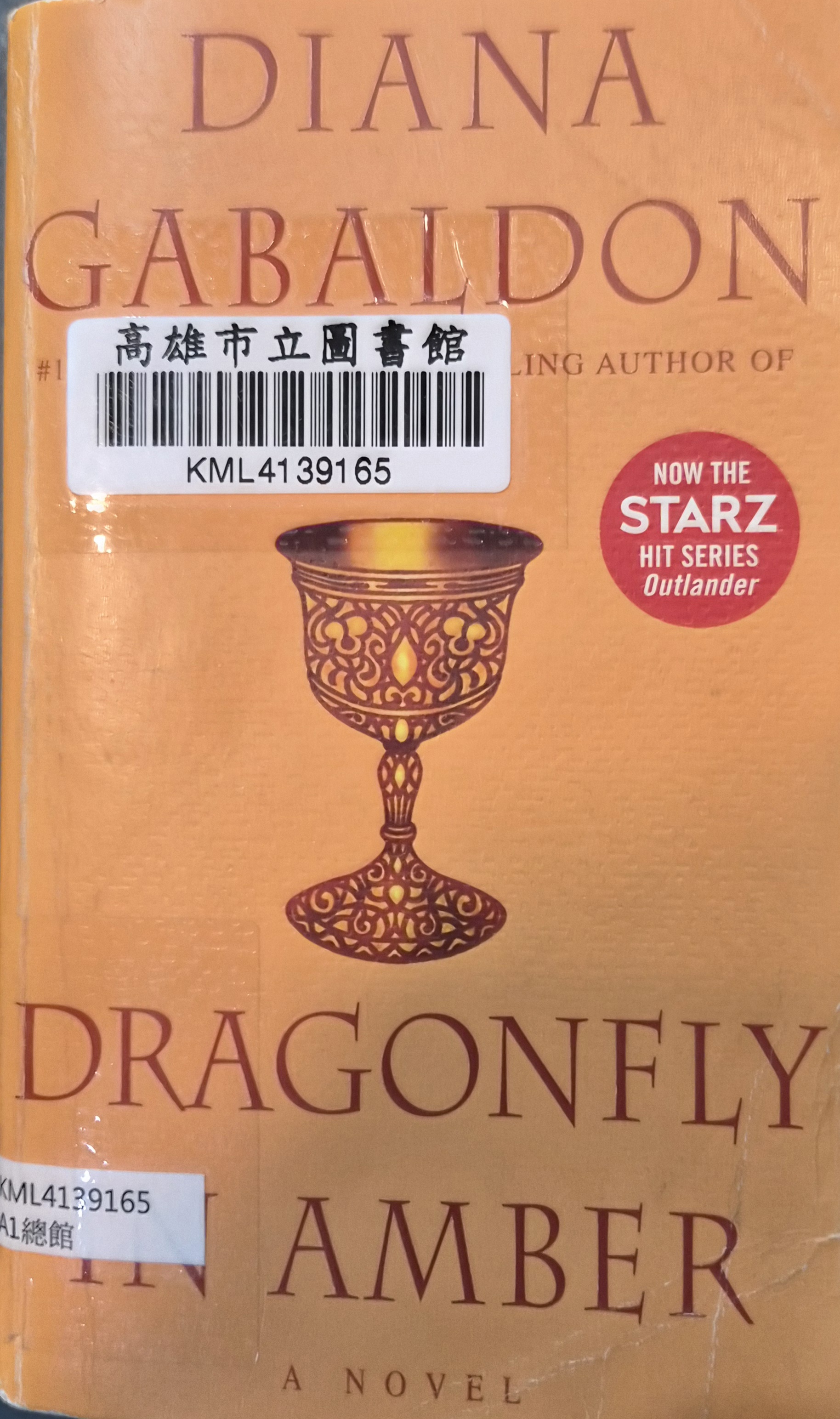 |
What if you could change the past, but no matter what you do, it still happens? Dragonfly in Amber by Diana Gabaldon is a story filled with love, war, courage, and difficult choices.Claire is a smart and strong woman who travels through time from the 20th century to the 1700s. She falls in love with Jamie Fraser, a Scottish Highlander, during a period filled with danger and historical conflict. What makes this story special is not only the romance, but how it shows the cost of loyalty, the pain of war, and the strength people burst when they are trying to protect their loved ones. The book switches between the past and the present, showing how memories can stay alive even after many years have passed.
In the beginning of the story, Claire returns to Scotland with her daughter Brianna. Twenty years have gone by since she left Jamie in the past. Claire never stopped loving him, and those memories are both beautiful and painful. She finally decides to tell Brianna the truth about her father and the time she spent with the Jacobites. At that time, Claire is emotional because she talks about her struggles. Holding such a huge secret for so long, understanding the truth could change the way your child sees the world and even sees you, what's more affecting what Brianna knows about the real world. Claire hopes that telling her daughter the truth will make her understand the truth of where she comes from and who she actually is.
The book takes us back in time to Paris, where Claire and Jamie try to stop the Jacobite rising, a rebellion that hopes to return to the throne of Scotland Prince Charles Stuart . Jamie believes that if the rebellion continues, the Highlanders will be destroyed.Therefore, he wants to prevent the war before it begins. This shows Jamie’s bravery, but also his deep love for his people. It is not an easy thing going against what others believe is their hope for freedom. Sometimes, doing the right thing means standing alone, and Jamie carries this responsibility of helping people heavily.
While they are in Paris, Claire and Jamie face political campaigns, betrayals, sickness, and heartbreak. They pretend to support the Jacobites while secretly trying to destroy their plans. Claire also works as a healer in a hospital, which shows her strong sense of duty to help anyone in need. She never stands aside when someone is suffering. Many young people today can connect with that feeling of expecting to help others and make a difference, even when the world seems too big and complicated.
The story becomes more intense when the war finally begins Claire and Jamie travel with the Jacobite army across Scotland. They go through battles such as Prestonpans, where the Scots win but also discover the true horror of war. Even victory can be heartbreaking when lives are lost. Edinburgh becomes a place of strategy, danger, and fear as the rebellion continues toward its tragic end. Through every moment, Jamie remains determined, even when hope is slipping away.
One of the most powerful parts of the novel is it depicts how Claire and Jamie support each other. Their love is passionate, but it is also built on teamwork and sacrifice. They constantly choose to stay by each other's side, even when the world around them is falling apart. Claire is not a passive character. She makes bold decisions, stands up for what she believes in, and refuses to be treated as the interior because she is a woman. She challenges the expectations of the 1700s and shows that women can be just as brave, intelligent, and capable as anyone else. In real life, many people—especially young women—can see Claire as a role model for confidence and independence.
As the Jacobite rising gets closer to its doomed ending, Jamie realizes that the final battle at Culloden will end in tragedy. Knowing there is no way to stop it, he makes the hardest decision of his life. To save Claire and their unborn baby, he forces her to go back to the future. The moment they say goodbye is heartbreaking because both of them believe this is the last time they will ever see each other. It reminds us that love sometimes means letting go to protect the person you care about. Goodbyes in real life are painful too, whether it’s moving away from someone you love or watching a friendship change over time.
In the present, Claire is left to face the world without Jamie. She becomes a doctor, raises Brianna, and tries to live on.However she never forgets the past. When she discovers that Jamie survived the war, her heart is suddenly filled with hope again. The ending shows that love can survive even when time tries to tear people apart. It also teaches that the choices we make today can echo into the future in ways we do not expect.
The moral of Dragonfly in Amber is that love and loyalty give people strength to face impossible moments. The book shows how history is shaped by real people making painful decisions, not just dates of historical events in a textbook. It also teaches readers that even if life moves forward, the memories and relationships we treasure will stay within us. Claire’s courage reminds us that we should fight for what we care about. Jamie’s honor shows that standing up for others matters, even when the world seems to go against us.
This story guides us to reflect on our own lives. What would we sacrifice to protect the people we love? How do our choices shape the lives of others? When we feel hopeless, do we keep trying anyway? The book encourages readers to believe that love, hope, and bravery will never be in vain, even when the ending is uncertain.
Dragonfly in Amber may be a fictional story, but the emotions in it are very vivid. This book reminds us that history is not only about wars and kings, but about the human heart.
|
| 瑞祥高中 |
吳〇淳 |
V is for Vampire
【書籍介紹】
書名/V is for Vampire推薦者/瑞祥高中‧吳〇淳內容簡介:
|
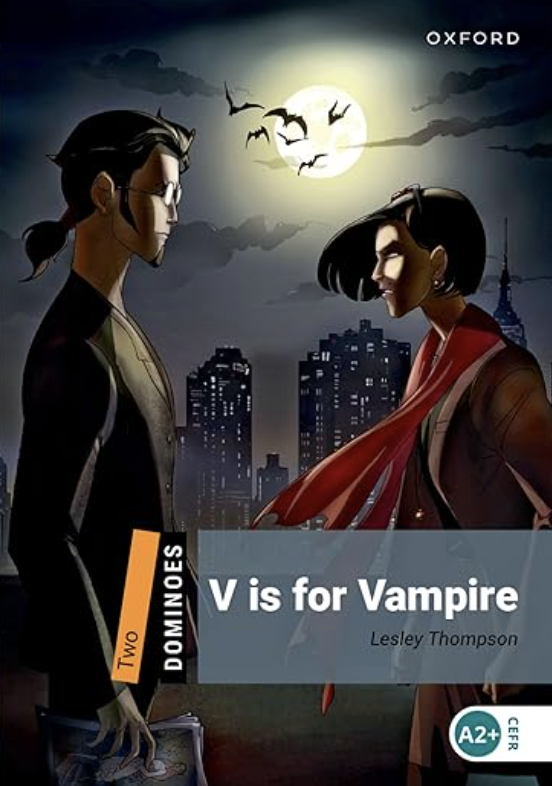 |
It’s a mystery story about betrayal and power that begins with the tragic death of George and Anne Ballantine, owners of a famous New York fashion house. Their passing leaves their children, Angie and Don, in charge of the business, along with their old friend and family lawyer. Vera, a trusted business partner, remains on the board of directors. The Ballantine Empire, once stable and strong, begins to shift as new players and hidden motives emerge.
When I first read this story, I didn’t expect it to stay in my head for days, but it did. In the beginning, I was curious about what was going on, but then I realized that the writer had set a mystery in it. Who killed Anne Ballantine、George 、Mylene, and Vera Donato? What’s the killer’s attempt to get? And why is V for the Vampire? Who is the vampire is that Vera、Viktor, or Ed Valdemer? That's all in my mind when I first open this book.
Early on, the story introduces Viktor Sarav, a mysterious and charismatic man who slowly becomes involved with Angie. Despite Vera’s suspicions, Viktor quickly gains Angie’s trust and affection, eventually marrying her. Vera, however, is not convinced of Viktor’s sincerity. She notices strange behavior, secrets, and unexplained deaths surrounding him, including the murder of Don, Sasha, and Mylene. However, things become clear as I start reading Chapter 3 - Viktor is hurt. I soon suspected that Viktor was the murderer who killed Don and Angie’s parents, cause he was lying. As I read that the CCTV shows that Viktor got out of his car in the garage and walked quickly over to the nearest wall, then he hit his head hardly few times, it was all direct and performed by himself. Not only did this let me suspect him as a murderer, but also the death of Don, too! Cause Don was who first checked the CCTV! This let me doubt Viktor as a killer and a Vampire.
Above all, Vera stood out as my favorite character. She wasn’t perfect, but she was the only one who dared to question what others ignored. I admired her stubbornness, even when it was clear she was risking everything. Her death hit me harder than I expected. I felt angry—almost betrayed by the story itself—for taking away the one person who seemed to represent reason and loyalty. Although Vera’s suspicion led her to investigate Viktor’s past. She uncovers oddities about his age, background, and connection to other mysterious deaths. She even finds that Viktor might not be human — he could be a vampire.
Her investigation brings her closer to danger, but she is determined to protect Angie and uncover the truth. This makes me think that a friend in need is a friend indeed. During this era, people always think about how much interest they will get from doing one thing or even making a friend, but sincerity for sincerity is a principle that we need to comply with, isn’t it? This is the reason why I like Vera, I admire the courage she has, and how sober she is when everyone was enveloped in a mystery Viktor made.
On the other hand, Viktor was the vampire and the murderer of this mystery. He pretends to be a kind 、 patient person who was attracted by Angie’s charisma, which reminded me of real people who manipulate others for power. I thought about toxic relationships I’ve seen among friends, and the parallels were clear. That connection to reality is what made the story stay with me. By the time I reached the ending—Angie on her honeymoon, Vera gone, Viktor smiling at the news—I felt a mix of horror and sadness. It was more than just a vampire tale. It was a warning about trust, appearances, and how easily people can be deceived when they are vulnerable. For me, the true fear is not the supernatural, but the everyday truth that predators often wear the friendliest faces.
To me, this story is more than a tale about vampires. It reflects themes of power, deception, and blind trust. Angie represents someone who is emotionally vulnerable after the death of her parents and brother, making her susceptible to Viktor's manipulation. Viktor symbolizes hidden evil — someone who wears a charming mask but harbors dangerous intentions underneath. In my opinion, the author cleverly uses the fashion industry — often associated with beauty, glamour, and appearances — as a metaphor for how people can be easily deceived by what looks good on the outside. Just like Viktor is attractive and polite, but beneath his handsome face lies something. People really have to think before stating a relationship with a stranger, who you don’t even know how old they are, so just for your own safety, you should trust yourself rather than others, cause you don’t really know what’s in their mind.
|
| 楠梓高中 |
蔡〇妤 |
Making decisions
【書籍介紹】
書名/Making decisions 推薦者/楠梓高中‧蔡〇妤內容簡介:
|
 |
When I first opened this book, I thought it would just be another boring textbook about psychology or health. The more I read, the more I realized that it was an interesting book that was pratical and enjoyable.The mix of Jamie’s snowball story, brain science, and the six steps of decision-making made everything connected to real life. It didn’t sound like a theory. It seemed like meaningful advice that could be applied in my everyday life.
The part about Jamie on the playground.
The part about Jamie on the playground really left an impression on me.Jamie was stuck between throwing a snowball back at the bullies or walking away,I thought maybe she would fight back immediately, because that’s what most kids would do in movies. However, she chose to drop the snowball and avoid greater trouble. Her decision made me realizethat sometimes the bravest choice is not fighting. It’s about practicing self-control and thinking ahead. This honestly reminded me of every moment when I wanted to argue with my friends just to prove I was right. However later, I understood that “winning” the fight didn’t actually make me happy.
Another aspect that surprised me was the science part. I didn’t know our prefrontal cortex helps us think and solve problems, while the amygdala controls emotions and fear. It made me reflect on why I sometimes make poor choices when I’m tired or angry.
The book also mentioned that our brains consume about 20% of the body’s energy. That fact shocks me because I often stay up late, skip breakfast, and end up feeling unfocused and drowsy throughout the day.
Now,I understand how lifestyle habits such as eating nutritiious food, and getting enough sleep—can actually help me make better decisions. Moreover, I haave never considered of blueberries or even dark chocolate “brain food,” but now I am interested in trying them.
In addition to the two parts mentioned above,the six steps of decision-making were probably the most useful part for me. Step one, identifying the question, is something I often overlook. I tend to rush into choices without first clarifying the problems.As for step four, considering the consequences, it also reminds of thinking twice before leap.The book illustrated several examples like eating candy before dinner or studying instead of playing. I realized that this is a challenge I frequently face—balancing short-term enjoyment with long-term benefits.
What I also appreciated was how the book connected decision-making to the community. It’s not just about what to eat or whether to study. Decisions can affect my classmates, my family, and even larger groups like my school or society. The Civics in Action part also inspired me)that being a responsible community member means supporting others and making thoughtful choices together.
Overall, this book taught me that decision-making is both science and art. It involves the brain, emotions, values, and also continuous practice. I learned that it’s acceptable to make mistakes, as long as I reflect on them and try again. I also learned that preparing my body and mindthrough sufficient sleep, healthy food, and regular exercisecan help me make wiser choice.Most importantly, I realized that good decisions not only benefit me but also positively influence the people around me.Next time,when I face a difficult choice, I’ll try to slow down, follow the six steps, and think not only about what I want, but also about what’s best for the people around me. This book did more than explain how to decide; it urged me to become more thoughtful, more responsible, and even more courageous in my own life.
|
| 楠梓高中高中 |
陳〇熹 |
Three Tales of Maui
【書籍介紹】
書名/Three Tales of Maui推薦者/楠梓高中高中‧陳〇熹內容簡介:
|
 |
In many myths, strange gods and monsters are frequently mentioned. They possess extraordinary powers, relying not only on magical incantations but also on the ability to call the wind and summon the rain.For me,these legendary figures.
Maui is one of the most representative mythical figures. This book discusses three myths about Maui and elaborates on how the ancients imagined the earth, showcasing their incredible wisdom.
In the first myth, Maui brought along his ancestors’ magical fishing rod and went to the sea with his brothers. Unlike the others, who used their rods to catch fish, Maui wondered whether a fishing rod could be used to catch something else. Without much thought, he decided to try. After much effort, he miraculously pulled up land from beneath the sea.
This story reflects the ancient people’s curiosity about how land was formed and their imaginative vision of the world. It teaches us that instead of always following the rules, we should sometimes think outside the box to create new possibilities. Even small ideas can lead to a different future. This reminds me of how many inventions are originated from ideas that were initially ridiculed but later became widely accepted. For example, the Wright brothers, pioneers of flight, were mocked because people at the time thought it was absurd to imagine humans flying. Yet the brothers did not give up. Through persistent effort and experimentation, they eventually invented the first airplane, forever changing human transportation and allowing people to soar through the sky.
The second myth tells about a time when the sun moved too quickly, leaving people without enough time to work. Maui devised a plan: he and his brothers wove thick ropes. When the sun appeared, they tied it down, forcing it to slow and lengthen the day. This story made me realize the importance of managing life’s rhythm at the right time. When faced with unreasonable circumstances, we should not passively accept them but instead seek ways to change the situation. Such proactive solutions are often more effective than simply hesitating. Nowadays, many people feel overwhelmed by busy schedules and invisible pressures, yet they rarely reflect on whether they have managed their time well or used it wisely.
The third myth is about how Maui brought fire to humanity. In ancient times, before people could use fire, they struggled to light dark caves, fend off wild animals, and cook food. Maui once extinguished the fire he had lit in order to demonstrate how fire could be made. One day, when his prank was discovered, the fire god attacked him. Though injured, Maui accidentally discovered the method of drilling wood to make fire during the conflict. He returned to the village and taught the people how to create and use fire. This reminds me that many inventions are the result of failures and persistence. The first attempt may fail, but failure itself can lead to another discovery. What truly matters is not depending on others, but mastering skills and solutions independently.
Since childhood, I have been fascinated by mythological stories and their magical, imaginative qualities. They form a bridge of joy and sorrow, making them endlessly captivating. As I grew older, I encountered fewer myths. However, during a recent visit to an online library, I discovered a book about Maui. When I read it, I realized I was experiencing these myths for the second time. Unlike when I was a child, when I eagerly anticipated the ending or daydreamed about a beautiful world, now I appreciate how myths explain the origins of the earth and reveal the ancients’ perspectives on the ever-changing human world.
Through these three legends, I have learned that living bravely means embracing change, imagining the impossibles, and not fearing failure. The legendary Maui is not a flawless god, but rather a mirror reflecting the challenges we encounter in real life.
|
| 楠梓高級中學 |
康〇禕 |
Atomic Habits
【書籍介紹】
書名/Atomic Habits 推薦者/楠梓高級中學‧康〇禕內容簡介:
|
 |
Key to success: Not just thinking and waiting. Even a 1% improvement each day, when combined with good habits, can make a huge difference.
Why can small details make a big difference? Habits are hidden in everyone’s life. Maybe you never notice them. The system of habits can decide whether we succeed or fail. He is the UK national coach who shows attention to detail to lead the team to win. Little details can affect one’s life. The habit system in life is similar.
Habit is like building a house: without a strong foundation, even if you want to change, you might still fail. In this book, I found that if you think habits are very hard to build, it’s not your mistake, but your life system. I learned about the formation of habits, daily routines, and so on. How to build a good system is in everyone’s hands. And how can we use it to make our life better?
Before I read this book, I didn’t have a great plan or study habits. During big exams, my performance went up and down. I felt so regretful. I often felt I could do better, but I didn’t know how. Sometimes, I tried to study harder, but I could not keep it up. It made me feel tired and sad.
One day, when I was window shopping at a department store, I looked at the books more carefully than ever. I saw this book, and it made me curious. In the book, there was one sentence that touched my heart. It said: “Why do you want to open this book?” I think maybe I want to change now, but I don’t know how to do that. This book is like a ray of dawn shining into my life and leading me to my dreams. It gave me hope.
On the road to changing my habits, I suddenly thought of “The Law of Least Effort.” Kobe in the NBA is known for his self-discipline. Every day, he woke up at 4:00 a.m. to practice. Built up over time, his ability and body metrics became stronger than his peers. The story shows that good habits are not made in one day. If you improve by 1% every day, you’ll be 37 times better in a year. But if you get 1% worse every day, you’ll almost end up with nothing.
Now, I try to change myself. In the beginning, I adjusted my study time. After getting used to it, I added more time again—five minutes, ten minutes. Although it was not obvious at first, over time, I built a study habit. I also try to set small goals every day, like reviewing one lesson or reading one page. Small steps help me feel good and keep going.
Building on a good foundation, people often think this is enough. They feel this is their limit. Actually, they don’t really push themselves. This is not good. Often, they don’t want to challenge themselves. Mike Tyson, a boxing champion, practiced small habits every day. His success was not from a one-time breakthrough. It came from many small efforts over a long time. I realized having a habit is not enough. We need to continue it and improve slowly.
“Success is the result of habits.” — Aristotle. This again shows the benefits of small habits. It gives me many ideas and teaches me that good can always be better. We should not stay in our comfort zone. Be brave and challenge yourself. I believe these efforts will affect my whole life. Little habits can change life step by step. I will try my best and make my life better every day.
|
| 楠梓高中 |
王〇翔 |
Spectacular Sport Baseball
【書籍介紹】
書名/Spectacular Sport Baseball推薦者/楠梓高中‧王〇翔內容簡介:
|
 |
Spectacular Sport Baseball, written by Marissa Hernandez, focuses on the history of baseball and some of the rarer plays on the field, such as no-hitters and perfect games. The book also integrates complex statistics with baseball, allowing readers to better understand the game.
After reading Spectacular Sport Baseball, I gained a deeper understanding of the sport I love, discovered some previously unknown baseball statistics, and learned about the origins and development of American professional baseball.
The book particularly impressed me with its content. Baseball wasn’t a popular sport in the 1700s, but it gradually gained popularity in the mid-1840s. This was because a team called the New York Knickerbockers, led by Alexander J. Cartwright, created the world’s first baseball rules to make the game run more smoothly.
This book also introduces many baseball statistics, such as ERA, which is a statistic about pitchers. Spectacular Sport Baseball mainly explains how pitchers dominate batters. Fortunately, baseball is a team sport, and each game consists of nine innings. In each inning, the attacking team has three outs to use. The team must use these outs to score runs. However, if the scores of the two teams are the same after nine innings, they must continue to play until a winner is determined. There are nine defensive players on the field at a time, including the pitcher, the catcher, four infielders, and three outfielders. Defensive play begins with the pitcher, whose goal is to throw pitches that are difficult to hit. If a pitcher gets three strikes on a batter, the batter is out. The catcher crouches behind home plate and tries to catch the pitches.
After reading Spectacular Sport Baseball, I gained a deeper understanding of baseball. From its humble beginnings to its current form, baseball's rules have changed many times since they were first created by early players. Rare and special events also occur on the baseball field. For example, a no-hitter happens when a pitcher does not allow any hits, including singles or home runs, during the entire nine innings. Even more exciting than a no-hitter is the perfect game, in which a pitcher allows no hits, no walks, and no errors throughout the game.
Another record is about batters. If a batter gets three or more hits in a game, it is called a strong offensive performance. Another special record occurs when a batter hits a single, a double, a triple, and a home run in the same game — this is called “hitting for the cycle.”
Baseball rules are still evolving, and many new statistics have been developed to make the sport better. I learned a lot about baseball statistics from Spectacular Sport Baseball. The book also taught me some simple formulas for calculating them and deepened my understanding of my favorite sport, making me even more interested in baseball.
|
| 楠梓高中 |
劉〇瑜 |
In My Feelings
【書籍介紹】
書名/In My Feelings 推薦者/楠梓高中‧劉〇瑜內容簡介:
|
 |
In today’s world, emotional intelligence (EQ) is becoming more and more important. It is not just about being smart or getting good grades; it’s about understanding our feelings and others‘. After reading some articles and books about emotional intelligence, I learned how important EQ is in our lives, especially for teenagers like us.
First, what is emotional intelligence? It has five main parts: self-awareness, self-control, motivation, empathy, and social skills.
Self-awareness means knowing our own emotions and how they influence what we think and do. For example, when I feel nervous before a test, I try to deal with that feeling instead of ignoring it. This awareness helps me calm down and do better.
Next is self-control. It means we can manage our emotions and actions. For example, if I get a low grade, I might feel sad or angry. Instead of blaming the teacher or giving up, I can think about what happened and decide to study harder next time. This reflection helps me make better choices next time.
Motivation is another part of emotional intelligence. It gives us the energy to reach our goals. When I want to improve my grades, motivation helps me study every day and stay focused. Even when I meet problems, emotional intelligence helps me stay positive and not give up easily.
Empathy means understanding how other people feel. For example, when friends feel sad after a breakup, "empathy" helps me comfort and support them. When we show empathy, our friendships become stronger and more trustworthy.
Social skills are also important. They help us talk to others, solve problems, and work well in groups. In school, we often have group projects. When we listen carefully and respect other people’s ideas, we can work better together and get good results.
Emotional intelligence also improves our mental health. People with high emotional intelligence often feel happier, handle stress better, and have better relationships. They also do better at work. I want to keep learning these skills as I grow up.
Sometimes, I feel stressed because of homework and exams. Because of self-awareness and self-control, I’ve learned to take short breaks and relax. When I feel sad, I talk to my friends or family. It really helps me feel better.
In conclusion, emotional intelligence is a very useful skill in life. It is not something we are born with, but we can learn it. By practicing self-awareness, self-control, motivation, empathy, and social skills, we can become better people. As a teenager, I believe emotional intelligence will help me in school, in my friendships, and in my future job. Emotional intelligence is a journey, and I am excited to keep learning and growing.
|
| 楠梓高中 |
貝〇格 |
Bill and Melinda Gates
【書籍介紹】
書名/Bill and Melinda Gates推薦者/楠梓高中‧貝〇格內容簡介:
|
 |
Bill Gates, born on October 28, 1955, is one of the most famous and wealthiest individuals in the world. He is known not only for creating a successful company but also for his charitable efforts to help others.
Bill grew up in a family of six in Seattle, Washington. His father was a lawyer, his mother was active in charity work, and his grandfather was a banker. Compared with most families at that time, Bill’s family was quite wealthy. This gave him access to resources such as computers, which were very rare and expensive in the 1960s. While many people could barely afford basic necessities, Bill’s circumstances gave him opportunities others could only dream of.
In 1962, his family took him to the World’s Fair in Seattle. There, Bill discovered computers for the first time. He was fascinated and excited; this moment may have sparked his dream of becoming a programmer. Seeing his interest, his parents enrolled him in Lakeside School, a private school that had advanced technology resources. At Lakeside, Bill not only explored programming but also started a club called the Lakeside Programmers Club. During this time, he met Paul Allen, a fellow student who became his close friend and lifelong collaborator.
After graduating from Lakeside School in 1973, Bill attended Harvard University to study law. However, his love for technology was reignited when Paul Allen showed him the Altair 8800, an early personal computer that had no software. Together, Bill and Paul created a program called BASIC for the Altair, and their work attracted attention from MITS, the company behind the Altair. MITS offered them a contract, marking the beginning of their professional programming careers.
In 1975, Bill and Allen founded Microsoft, a company that developed software for microcomputers. Although Bill initially wanted to study law, his passion for technology and Microsoft led him to drop out of Harvard to focus entirely on his company. Microsoft’s journey was challenging but rewarding. The company’s big breakthrough came in 1985 when it launched Windows 2.0 and later Windows 3.0. These versions of Windows helped make computers easier to use, especially for beginners, and started transforming the world of technology.
While Microsoft was growing, Bill faced personal challenges. Paul Allen was diagnosed with cancer. Although he eventually passed away, Gates continued working hard to lead the company to greater success. By creating user-friendly operating systems like Windows and expanding Microsoft’s influence worldwide, Gates proved his dedication to technology and innovation.
During this time, Melinda French joined Microsoft and eventually became Bill’s wife, Melinda Gates. Together, they established a foundation that focuses on improving health, education, and social conditions. Melinda focused on helping others, especially people in poor countries. For example, she worked to provide vaccines to areas that lacked access to healthcare. Bill supported her efforts and contributed through their strong teamwork. With both Microsoft and their foundation, the Gates family built a strong reputation for success and generosity.
It’s clear that Bill Gates grew from being a curious, hardworking boy fascinated by programming into a leader who changed the world through technology. But his story is not just about computers; it’s also about kindness and helping others. Together with Melinda, Bill has impacted millions of lives by funding vaccines, addressing global issues, and making technology accessible to underserved communities.
This story teaches us that success is not only about money or achievements. What matters most is using the source you have to make a difference for others. Bills’life inspires us to embrace generosity, kindness, and teamwork. We should all strive to help one another, as this is the key to living a happy and fulfilling life.
|
| 楠梓高中 |
張〇妮 |
Beauty and the Beast
【書籍介紹】
書名/Beauty and the Beast 推薦者/楠梓高中‧張〇妮內容簡介:
|
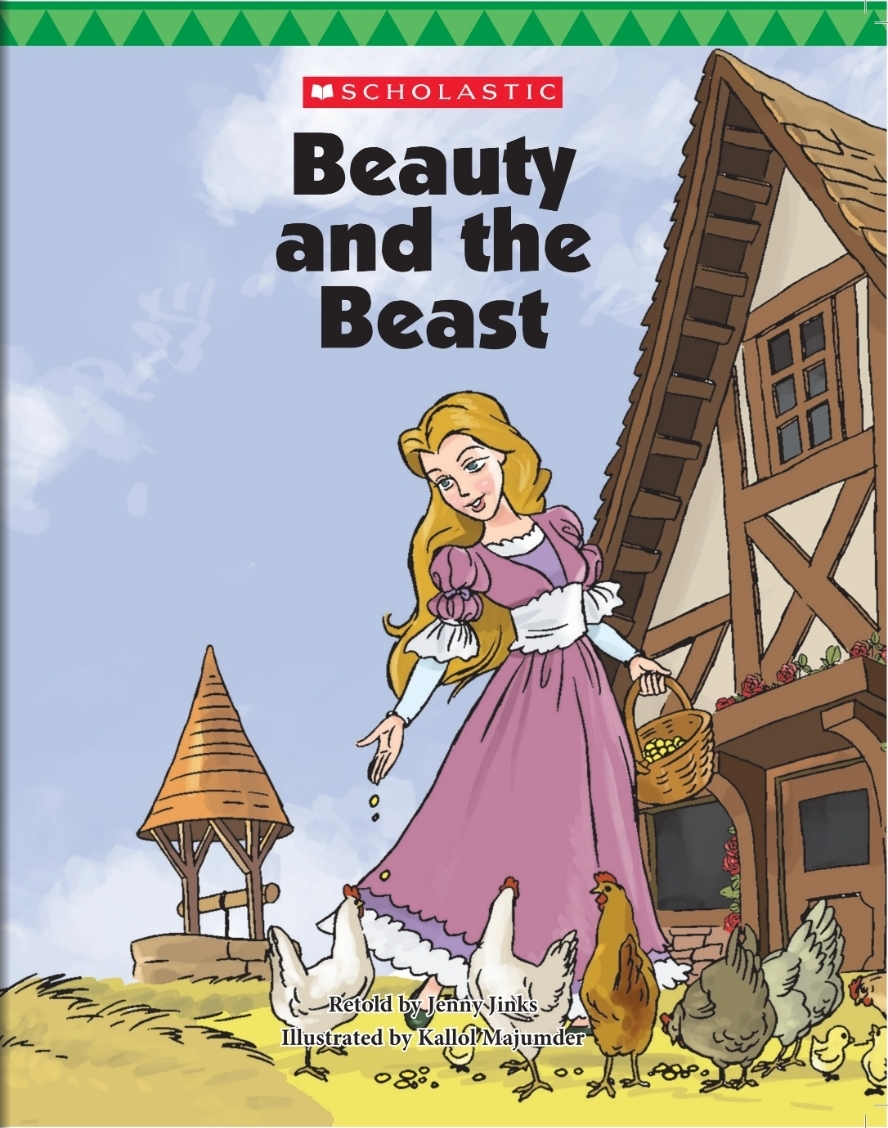 |
The book I read is Beauty and the Beast. It is a well-known fairy tale about love, kindness, and courage. The story tells about a beautiful girl named Belle and a prince who was turned into a Beast because he was proud and selfish. Only true love could break his curse.
Once upon a time, Belle’s father, a poor man, got lost in the forest and found a large, mysterious castle. It belonged to the Beast. Inside the castle, the man saw a beautiful garden full of roses. Because Belle loved flowers very much, Bell's father picked one to bring home for Belle. Suddenly, the furious Beast appeared and said he must die for stealing the rose. The poor man begged for mercy, explaining that the flower was for his daughter. Finally, the Beast told him that, but only if he sent one of his daughters to stay in the castle could he be alive.
When Belle heard this, she decided to go save her father because she loved him deeply. At first, she was afraid of the Beast because he looked scary and spoke loudly. However, she soon discovered that the Beast was not truly bad. He was lonely and kind. He gave Belle delicious food, beautiful clothes, and allowed her to read in the grand library. Every night, the Beast asked Belle to marry him, but she always refused. Still, she talked to him kindly, and they gradually became friends. She began to notic his good heart and realized that he cared about her more than anyone else.
One day, Belle asked to visit her family. The Beast agreed, but she had to promise to come back soon. However, when Belle returned home, she stayed too long because she missed her family. During that time, the Beast became sick and weak. One night, Belle dreamed that the Beat was dying, so she hurried back to the castle. When she arrived, she saw him lying on the ground. She cried and said she loved him. Her tears and love broke the curse, and the Beast changed back into a handsome prince. Finally, Belle and the prince lived happily together in the castle forever.
From this story, I learned many valuable lessons. First, we should not judge people by their appearance. Someone who looks ugly may have a kind heart, while someone who looks beautiful may be selfish inside. Belle learned to value the Beast’s heart instead of his face. Second, Belle was very brave. She sacrificed herself to save her father and stayed with the Beast even when she was afraid. She did not love money or a handsome face; she loved kindness and honesty. Third, this story gives me hope. It tells me that no matter how hard life is, people can always change and become better. The Beast was cursed, but when he learned to love and care for others, he became human again.
When I read this book, I felt both happy and sad. I was sad when the Beast almost died, but I felt happy and warm when Belle finally said she loved him. Sometimes I also worry about how people judge me or what they think about my appearance. But this story teaches me that true love and friendship are about what is inside the heart, not about how we look outside. In the end, I think Beauty and the Beast is a wonderful and touching story. It is simple but full of meaning. It teaches me about love, courage, kindness, and hope. I really enjoyed reading it, and I believe I will remember this story for a long time.
|
| 天主教道明高級中學 |
林〇康 |
Because of Winn Dixie
【書籍介紹】
書名/Because of Winn Dixie推薦者/天主教道明高級中學‧林〇康內容簡介:
|
 |
This is my first time to read an English novel, At first, I thought it might be difficult for me, but when I started reading it, I felt like I was in the story, watching everything happen right in front of my eyes.
Back to the story, a girl named Opal meets a dog in the Winn - Dixie grocery store, so she call that dog Winn-Dixie, Her father is a missionary in a church, always busy with preaching and other church stuff. Sometimes Opal feels lonely not only because oftentimes her father isn’t at home till late at night but also because her mother left them few years ago. At her desperate request, her father tells her ten things about her mom so that she can remember her. By this, she finally feels connected with her parents.
Besides the family issues, Opal has another challenge in her life. After Opal moves to Naomi, she meets many people like Miss Fanny, Gloria Dump, Otis, Amanda and the Dewberry brothers. In the beginning, Opal feels it hard to get along with them since each of them has his own problem. To smooth the difficulties over, Opal and the community members tried so hard to understand each other. Eventually, they all become good friends.
I was most impressed with the part when Opal's dog went missing on a terrible rainy night. It reminds me that my dog also went missing in the park a few years ago. I was very nervous and tried to figure out all the possible places where it could go. Finally I found it as Opal finally does with her dear dog. In the end, they were singing and playing instruments together as what I also did with my dog-dancing around my room and holding it tight.
The book is about love among family members as well as among friends, or those who play an important role in life. It makes me think about why we need to cherish the people who are present in my life and love what we have now, just like my family. Time flies so fast that regret will sneak in if I am too ignorant about expressing my appreciation and gratitude in time. The second thing I learned is that it's dangerous to judge a person too soon only based on our first impression. If Opal didn’t try to understand her neighbors and neither do other community members, it would be impossible for all of them to get over their trauma together. Just like the saying: "Don't judge a book by its cover, because the power of understanding is the strongest.
I am happy to have a chance to refresh myself with this great book this summer and would like to share it with more friends as well . Hope we can all feel the power of reading.
|
| 楠梓高中 |
陳〇涵 |
Marie Curie 瑪麗·居禮
【書籍介紹】
書名/Marie Curie 瑪麗·居禮推薦者/楠梓高中‧陳〇涵內容簡介:
|
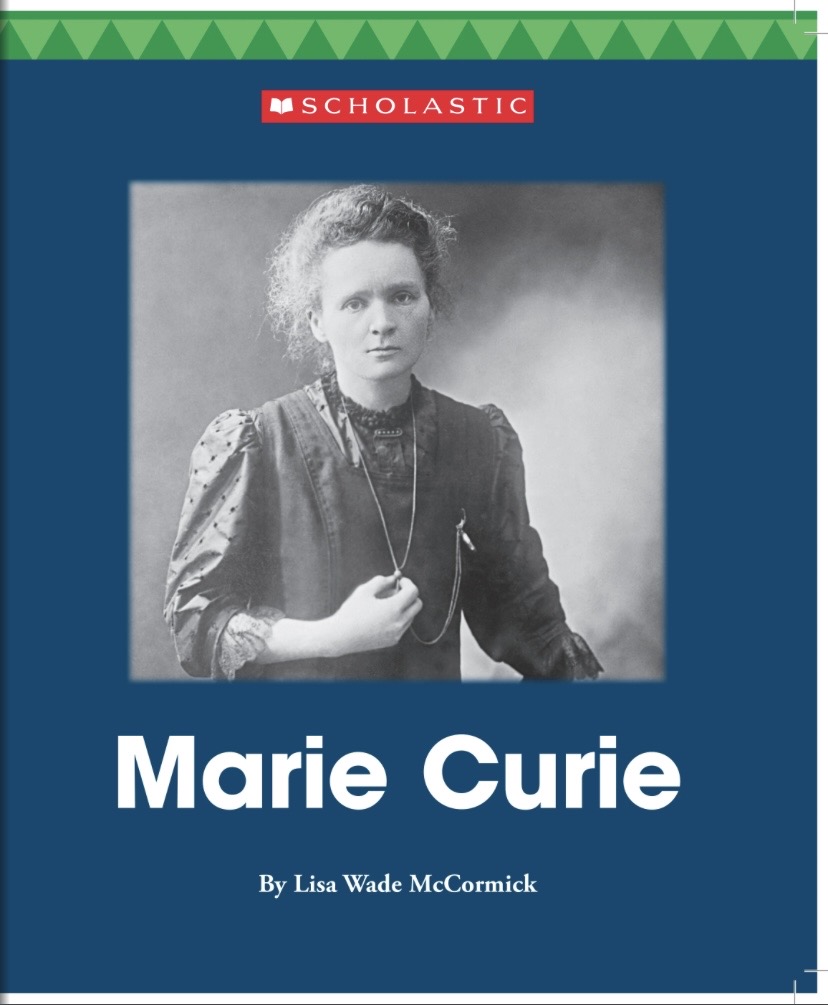 |
I think Marie Curie was a person who worked incredibly hard to achieve her dreams. She studied at a famous university in Paris, France, and earned two degrees in both physics and chemistry in only three years. Later, she became the first person in the world to win two Nobel Prizes, which I think is truly remarkable. Her story taught me that if we keep working hard and stay determined, we can achieve our goals.
What impressed me most was her research on radioactive elements. She and her husband, Pierre Curie, spent almost all their lives studying physics and chemistry. She worked in the laboratory every day, tirelessly searching for new elements. Life was very hard at that time, but she never gave up. Later, she discovered two new elements, polonium and radium. These discoveries not only changed the scientific community but also helped doctors use radiation to treat diseases and save many patients. Her research made me understand how powerful science can be and how one person’s effort can help the whole world.
I have absolutely no interest in physics or chemistry, and I am not good at these subjects either. I always thought these subjects were difficult and boring, and I only studied them for exams. However,after reading her story, I started to admire people who work hard for what they love. For Marie Curie, research was not done for fame or reward, but because she truly loved it.
Marie’s daughter was also outstanding. After her mother passed away, she continued her mother’s research and didn’t let it fall by the wayside. She also won a Nobel Prize for her contributions to research on radioactivity. They are the only mother and daughter pair in history who both won Nobel Prizes. Marie’s daughter not only inherited her mother’s work but also her spirit, achieving great success as well. I think that is something really admirable.
Their story reminds me of my own experience. Sometimes, I want to give up when things get hard or when I face problems. Nevertheless,Marie Curie didn’t stop because of failure or other people’s doubt. She kept going until she reached her goals. From her, I learned that if you really love something, you have to work hard for it. Success doesn’t happen overnight; it takes a long time of hard work and persistence. Her story taught me that dreams can come true if we take action and never give up.
After reading about her, I not only learned about a great scientist but also learned how to face life with the right attitude. She showed me that pursuing your dreams will always be hard, but if you have passion and stay persistent, even ordinary people can do extraordinary things. I hope I can be like her one day and follow my dreams with courage and effort.
|
| 楠梓高中 |
項〇璿 |
Anne Frank the Diary of aYoung Girl
【書籍介紹】
書名/Anne Frank the Diary of aYoung Girl推薦者/楠梓高中‧項〇璿內容簡介:
|
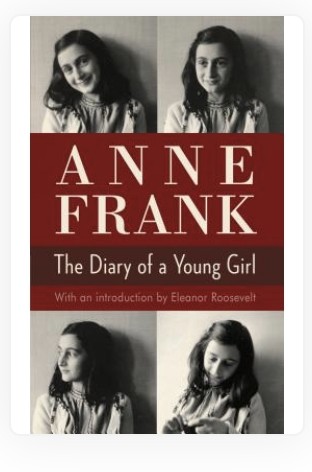 |
This book was written by a young girl named Anne Frank when the Nazis occupied the Netherlands. The story is about Anne, a Jewish girl, who hid in a secret room with her family during that time.
This diary records their daily life, Anne’s fear of the war, her hope for the future, her longing for freedom, and her deep personal feelings, which make readers reflect on humanity. The whole story is told in the first person, creating a strong sense of imagery and making readers feel as if they are really there.
It was listed by UNESCO in the Memory of the World Register as a true record of historical events. In addition, it was made into a movie called The Diary of Anne Frank. It is one of the most widely read and influential literary works after World War II, translated into 65 languages and has sold over 30 million copies. It is also often used in schools around the world to teach about the dangers of racism, war, and unfair treatment.
Although the diary did not win any literary prizes, its value is greater than any award. It is seen as a very important historical record and one of the most powerful books about war.
The story is centered around the diary Anne received from her father on her 13th birthday. She named it “Dear Kitty.” Under Nazi rule, she and her family hid in a secret room behind her father’s office. The diary records the dates and everyday events, her thoughts about when the war would end, and how long their life would continue. It also describes everyone’s feelings, their longing for freedom, and the harsh reality they faced, all written down carefully in the diary.
After more than two years of living in hiding, someone reported them, and the whole family was sent to concentration camps. The conditions in the camps were terrible, with poor hygiene, the easy spread of disease, and inhumane treatment. Anne’s family all died, and Anne herself did not survive. A few days before liberation, she died in the camp from illness.
Only her father, Otto Frank, survived. He found the diary his daughter had written and, deeply moved by it, decided to organize and publish it so that everyone could learn about and remember their story.
“The shock brought to us by just one Anne Frank is greater than that of all the others who suffered the same persecution. Perhaps it is better to say: if we had to know the full truth of all the victims, we would not be able to live.”
— Primo Levi, Jewish-Italian writer
I really like this book because the writer portrays the people in it vividly. It feels real, like I am there with them. Each day’s diary shows their hope, wishing that the bad dream will end soon. It is very touching and hard to forget. This is a story from history that we cannot run away from. Because of this story, we can understand more about how sad, cruel, and painful that time was. It helps people remember and care about history, so the people who suffered will not be forgotten. It also teaches us to treasure everything we have now — the people, the things, and the moments around us. This is what I learned from this book.
|
| 楠梓高中 |
林〇乾 |
King Arthur and the Knights of the Round Table
【書籍介紹】
書名/King Arthur and the Knights of the Round Table 推薦者/楠梓高中‧林〇乾內容簡介:
|
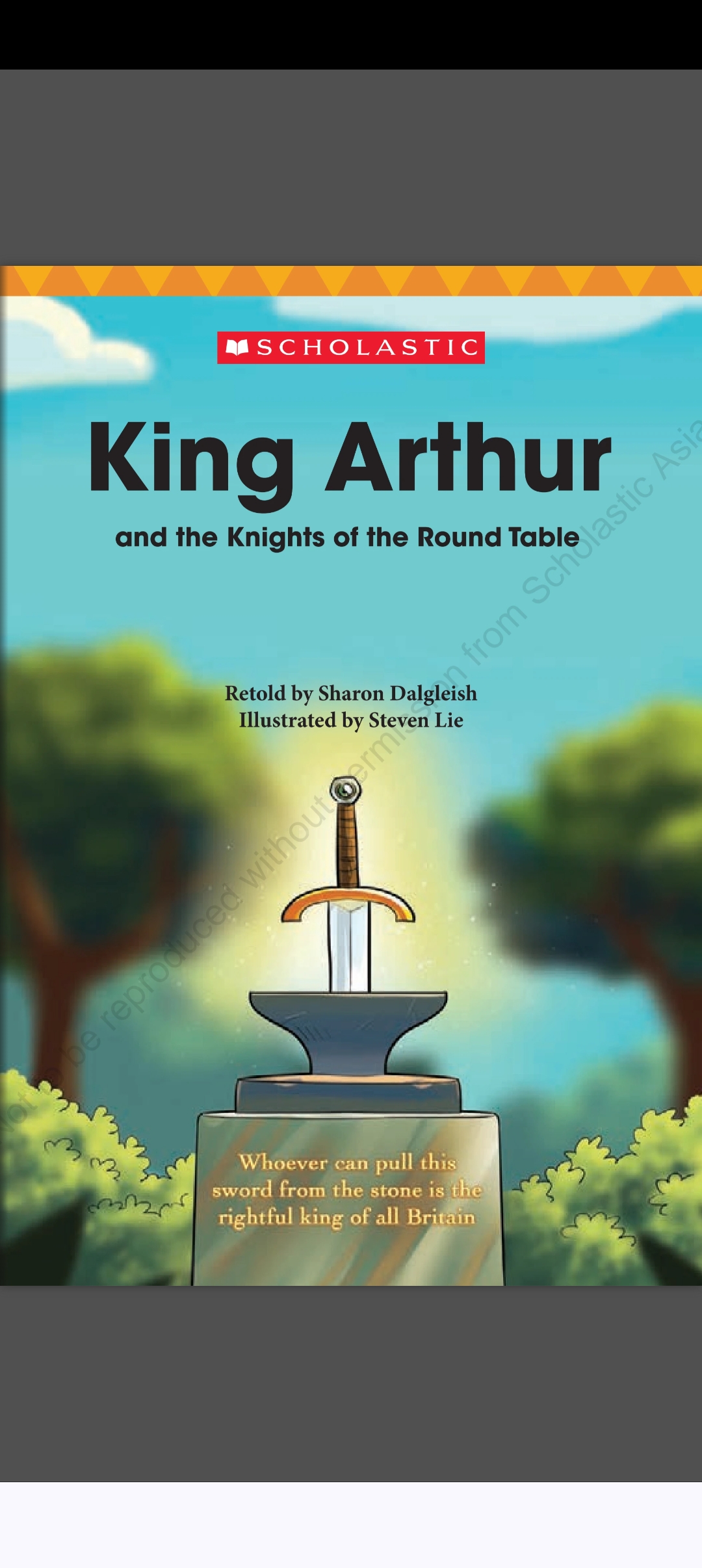 |
This book tells the story of King Arthur and his brave knights of the Round Table. Although King Arthur is one of the most famous figures in British legends, he is not a real historical person. His story has been passed down through generations as a symbol of courage, wisdom, and honor. At the beginning of the story, a wise magician named Merlin can see into the future. He foresees dark days coming to Britain and knows that the country will one day need a great king to save it.With Merlin's help King Uther has a child, and this child is destined to become the future king. His name is Arthur.
After finishing this book, my first impression was that King Arthur was truly great and brave. In the early part of the story, he uses his wisdom and leadership to gain people’s trust and become the rightful king of Britain. After he becomes king, Arthur leads his knights in many battles against giants and enemies. They use both bravery and intelligence to achieve victory time after time. In the middle of the story, Arthur’s sword breaks during a fierce battle with a giant. However, he does not give up. Instead, he receives a magical sword called Excalibur from the Lady of the Lake. Arthur promises that when his life comes to an end, he will return the sword to the lake. In the end, he keeps his promise. When he is badly wounded on the battlefield and approaches his death, he asks his knight to return Excalibur to the lake. This shows that Arthur is not only brave but also honest and noble. One of the most important parts of the story is the group called the Knights of the Round Table. They serve King Arthur, representing loyalty, courage, and friendship. Each knight has his own story and personality, which makes the book even more interesting. For example, Lancelot is known as the most loyal knight, but he falls in love with the queen, King Arthur’s wife.Thus, his story ends sadly.
I would recommend this book to anyone who loves history or legends. It tells the story of King Arthur’s life and his connection with the Round Table in a simple and easy-to-understand way. The language is clear and smooth.The reading experience is almost like reading a fairy tale, so readers can easily follow and enjoy the story. This book also teaches a valuable lesson: to be strong and powerful, one must be honest, brave, and kind-hearted. True strength comes from personality, not only from weapons or power.
I chose this book because I have always been interested in history, especially British and European history. I had heard about King Arthur long ago, but this book gave me a deeper understanding of his legend and how he became a symbol of hope for his people. Even though the story is fake, it remains an important part of British culture and continues to inspire readers around the world.
|
| 楠梓高中 |
姜〇庭 |
Atlantis: Poseidon's Lost City
【書籍介紹】
書名/Atlantis: Poseidon's Lost City 推薦者/楠梓高中‧姜〇庭內容簡介:
|
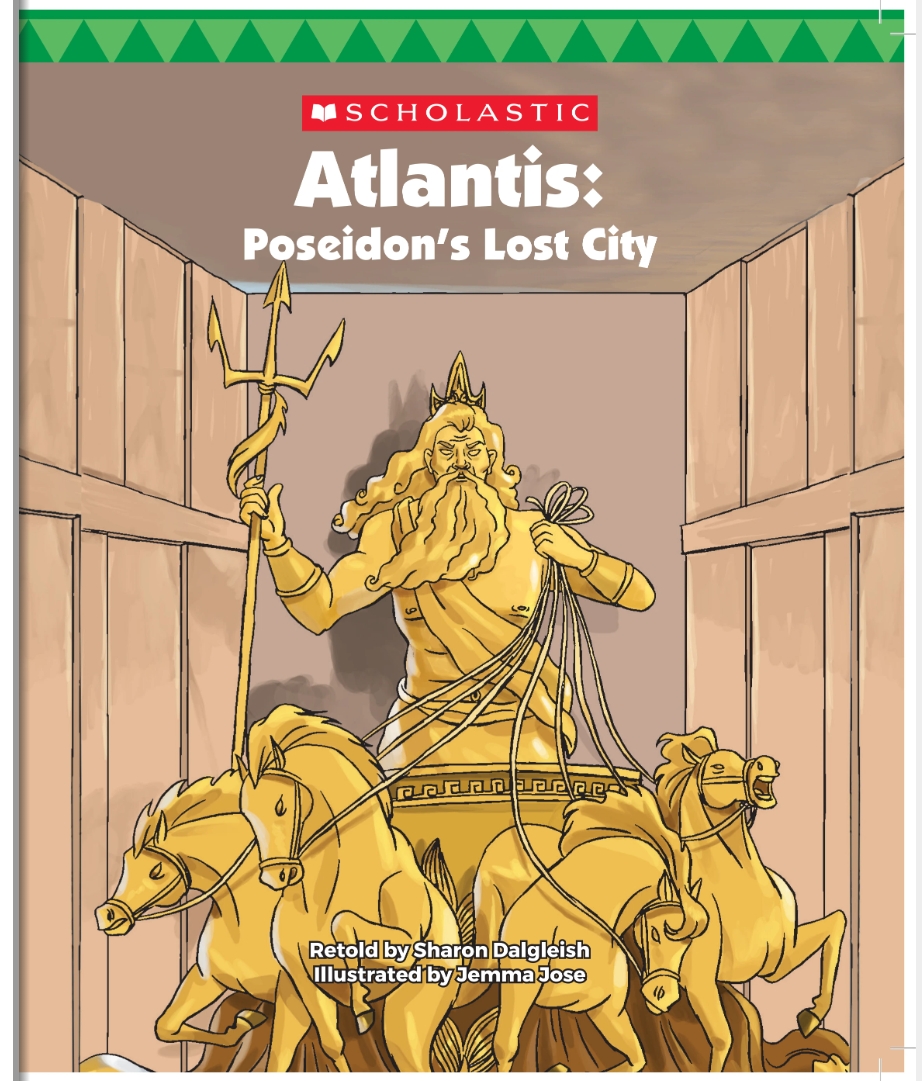 |
This Atlantis: Poseidon's Lost City tells the story of how, a long time ago, the world was ruled by powerful gods who lived high on Mount Olympus. The strongest among them were three gods —Zeus, Poseidon, and Hades. They decided to distribute their power by drawing lots. Zeus became the ruler of the sky, Poseidon took charge of the sea, and Hades ruled the underworld. They also wanted their own lands, so they shared the earth too. Poseidon got a big island surrounded by bright blue water.
He established a city-state on the island - Atlantis. From its rise to prosperity to its downfall, which was brought about by humankind's greed, Atlantis became a legend.
After Atlantis was built, Poseidon's ten sons ruled the city fairly. Under their rule and the rule of later kings, Atlantis became prosperous. People lived a self-sufficient life, and the air was filled with happiness. However, humankind became wealthier and more powerful, they became greedy. Therefore, they attacked other countries, took their enemies treasures, and treated enemies as slaves. Only Athens was still fighting back, and eventually, Atlantis lost the war. When they were preparing to return to their city, lightning came down from the sky and sank the whole city of Atlantis.
Some people say that Zeus, the king of the gods, was angry because of the people of Atlantis. Others say that Poseidon felt ashamed when his people lost to Athena and believed they no longer deserved to be his people. Thus, he made Atlantis disappear People in later times could not prove whether the legend was true or not. From then on, Atlantis became part of history.
This story tells us that we should cherish what we have now. We shouldn't be too greedy or try to get too much, because greed will hurt others and ourselves. In the end, we will have nothing. Sometimes people forget that they are already very lucky. They keep chasing money and power, but in the end, they lose the most important thing - their lives.The fall of Atlantis reminds us that even the strongest city can be destroyed because of humankind's greed. We should learn to be satisfied and live with a kind heart, not always trying to get more. Otherwise , we will get nothing and may even destroy ourselves.
|
| 高雄市立高雄高工 |
陳〇仰 |
The wrong way home
【書籍介紹】
書名/The wrong way home推薦者/高雄市立高雄高工‧陳〇仰內容簡介:
|
 |
I. Introduction
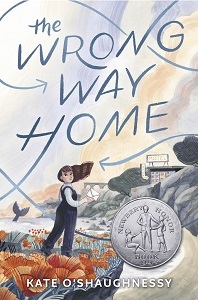
<The wrong way home>is a middle-grade novel written by American extraordinarily talented author Kate O’Shaughnessy, published in 2024 and awarded the Newbery Honor. This book tells the story of Fern, a twelve-year-old girl, who leaves a secluded community and struggles to adapt to the outside world while discovering her own identity and trust. It feels more like a journey of self-discovery, awaken from a cult-like community, and of redefining what “home” truly means. It is not just a story book; it is like a mirror, making me wonder: What would I choose if I were in her shoes?
II. Plot Summary
The story was set in a place called "The Ranch",where Fern has lived with her mother since she was six years old. The Ranch was an isolated, off-the-grid,” sustainable futurist community” in upstate New York. On the surface, the Ranch was an ideal place where everyone shared resources and was self-sufficient, avoiding all forms of modern technology and seemingly living a life of freedom. The Ranch was led by a charismatic leader, Dr. Ben, who was deeply respected by the residents. To Fern, the Ranch was home, and she believed Dr. Ben’s words without question. Even though life in the Ranch was insulated and physically hard, Fern was satisfied with it.
However, Fern’s mother began to recognize the dangers of Dr. Ben’s controlling nature. One night, she decided to escape with Fern. Although Fern followed, she felt torn—her heart was still attached to the Ranch, where life had been predictable and familiar.
Fern and her mother eventually settled in Driftaway Beach, a small town in California on the West Coast. There, Fern encountered the outside world for the first time—bright stores, popular culture, storybooks, and technology. Although everything fascinated her, she felt out of place and longed to return to the Ranch. However, as time passed by, the seeds of doubt began to sprout, nurtured by her new experiences.
Gradually, Fern met new people: Eddie, a girl who introduced fantasy novels to her and did science projects with her, and Babs, a tea shop owner who welcomed her with kindness. She encountered a supportive science teacher in school and discovered the rich, forbidden world in the local library .Through them, Fern discovered that human connection and exploring knowledge were not dangerous but empowering. Her inner conflict grew: should she trust her mother and embrace this uncertain freedom, or return to the Ranch that controlled her life? Step by step, she learned that “home” is not a single location but a place where one can be free, authentic, and surrounded by trust.
III. Personal Reflection
Reading <The Wrong Way Home> made me realize how difficult it is to leave behind what is familiar. Fern’s inner conflict—expecting freedom yet missing the Ranch’s comfort—felt authentic and relatable. It reminded me of my hesitation when facing life changes, I was often afraid of the intimidating unknown and would rather stay in my old habits.
I liked the passages in the book that described Fern's state of mind. For example, when she said “my chest constricts as a wave of homesickness overwhelms me”, I really resonated with her loneliness and struggle . Everyone probably experienced similar moments—leaving a familiar place, trying to find a new self, yet simultaneously feeling lost and uneasy. Fern’s dilemma was a common feeling we all faced as we grew up.
The scene in the book that most impressed me was when Fern looked up the definition of “cult”. As she read, she wondered,”If the ranch isn’t a religious organization, then it’s not a cult? But isn’t the worship of Dr.Ben here an excessive attachment?”This scene touched me deeply because it raised a more common question: How much of our beliefs are driven by our own thoughts, and how much are simply dictated by our circumstances?
In the end, when Fern made her choice, she said,”I can make up my mind, and my mind is screaming at me to not get back in that van.”It’s like a watershed moment, signifying her final decision to follow her heart instead of being led by others. This moment was incredibly powerful, and reminded me that sometimes in life, we truly must make the right choices, even if the road ahead was uncertain.
Another lesson that I learned from the book is the cost of freedom. The outside world was not easy—Fern faced loneliness, uncertainty, and the challenge of starting over. Yet it was through these struggles that she grew stronger and found her own voice. Freedom requires courage, and it is through facing difficulties that true independence emerges.
This book is more than a story of escape; it is a journey of growth and identity. It made me reflect on the meaning of home, reminding me that it is not just about family or place, but about belonging, trust, and authenticity.
IV.Conclusion
I think〈The Wrong Way Home〉is not just for young kids, but also deeply moving for adults. No matter how old we are, we can all get stuck in certain preconceived notions and become accustomed to relying on others for guidance. Kate’s writing reminds me that the roads of life will never go exactly as planned, and the wrong direction may become important nutrients for the future. When we take the wrong road, it’s not necessarily a waste, because the people we meet and the scenery we see along the way will become a part of our our life. The wrong way may become the right way, and each way has shaped us into who we are today.
In short, the book is for anyone who feels lost, who is searching for direction, or who is struggling with the idea of “home”. It assures us that even when we take the wrong way, we are still on a path that matters. Perhaps, the winding road is exactly where we are meant to be.
|
| 中山高中 |
戴〇于 |
Thirteen Reasons Why
【書籍介紹】
書名/Thirteen Reasons Why推薦者/中山高中‧戴〇于內容簡介:
|
 |
Thirteen Reasons Why tells the story of a girl named Hannah who commits suicide. Before she dies, she records thirteen cassette tapes, each explaining a reason and accusing a person connected to her devastating decision. The tapes are a final, haunting confession, a chronological account of the events, rumors, and isolated moments that, when added up, pushed her to the edge. Clay Jenson, one of her classmates and someone who is also mentioned in the tapes, receives them and is forced to listen to Hannah’s voice as she methodically reveals her painful experiences. The true weight of the story lies in the nature of these "reasons"—many of them are not massive, singular tragedies, but rather a series of seemingly small, interconnected acts of neglect or unkindness. Through the tapes, both Clay and the readers learn the truth behind her choice, realizing the domino effect that one person's careless joke or another's passive silence can affect. No one can truly know the impact they have on another person. We are often completely unaware, yet we are constantly influencing people, often without intending to. Hannah's tapes serve as a shocking wake-up call, showing how an accumulation of seemingly minor, unintentional cruelties can lead to a fatal consequence.
This book makes me think a lot about the power of words and actions. People often speak without thinking deeply, or make small jokes and believe that does not matter. However, in reality, even a sentence or an action can stay in another person’s heart for a very long time. What one does not care may make others suffer. This idea is a little scary, but it is also important to remember.We usually do not know what other people are going through in their private lives. A person may look fine on the outside but still feel painful inside. Therefore, in these moments, even a small act of kindness can bring comfort. On the other hand, one’s careless or negative comment can hurt more than we can imagine. This made me realize that we all carry some responsibilities in the way we treat people around us. I believe the lesson is not that we must always make the proper remarks in certain situation, but that we should try to be more careful and kind. Choosing to respect others, listen more, and show empathy may seem like small actions, but they can make a big difference. After finishing the book, I want to be more thoughtful in daily life, because our words and actions can truly influence others.
|
| 高雄市私立大榮中學 |
陳〇心 |
Diary of a Wimpy Kid 9: The Long Haul
【書籍介紹】
書名/Diary of a Wimpy Kid 9: The Long Haul推薦者/高雄市私立大榮中學‧陳〇心內容簡介:
|
 |
The summer takes an unexpected turn for Greg Heffley in Diary of a Wimpy Kid: The Long Haul when his mom springs a surprise family road trip on everyone. While she dreams of creating cherished "family memories," Greg and his brothers, Rodrick and Manny, want nothing more than to stay home in the air conditioning. From the moment their overloaded minivan pulls out of the driveway, Greg predicts disaster, and he isn't wrong. The journey quickly spirals into a sequence of absurd and funny predicaments that resonate with kids everywhere.
Although the beginning of the journey was full of hope, this family seemed to be cursed with bad luck. Things started to go downhill after they made several wrong choices. For example, Greg’s brother Rodrick mistook a safe for a microwave, locking the pizza inside. Because of this, they could only go to a vending machine for some cookies to fill their stomachs. This incident serves as a key moment, highlighting Greg's constant struggle to find peace and normalcy amidst his family's antics.
Later, at a country fair, Greg’s little brother Manny won a game by guessing the weight of a pig. The prize was the piglet itself, which Manny adopted. However, when the piglet was in the car, it started causing trouble, eating Greg’s lunch. When they called to find a hotel, they were told it did not allow pets, so they secretly brought the piglet in. Upon opening the door to their room, they found that the piglet had eaten several bars of soap and had made a mess. When they told the hotel owner, he explained that pets were not allowed. Consequently, they not only had to pay a fine but also had to compensate for the damages. After this "pig rebellion," Greg’s dad was so angry that he decided to send the piglet to a petting zoo. This upset Manny, who started trying to run away to see the piglet.
The road trip took a turn for the worse when the Heffleys encountered another family, the Snellas. The constant presence of the Snellas, who seemed to pop up at every turn—whether at the water park or the country fair—became a recurring source of frustration for Greg. As the road trip continued, the Heffleys’ minivan suffered more damage, and the family’s collective sanity began to unravel. They attempted to visit a historical site, only to find it was just a replica sculpted from butter. Stripped of their screens and gadgets, they were left with nothing but each other, which resulted in more fights and misunderstandings. For Greg, the lack of video games and social media was especially hard to handle.
At the water park, the Heffleys lost their locker key and asked a manager to help open it, only to find the locker empty. As they were leaving, they saw the Snellas driving away in their own beat-up minivan and immediately assumed the Snellas had stolen their belongings. This misunderstanding made the relationship between the two families even worse.
Later, they found the Snellas' minivan parked outside a motel room, so the Heffleys snuck inside, determined to get revenge. While they were wreaking havoc, the Snellas suddenly returned. After a moment of eye contact, the Heffleys made a frantic escape. They scrambled into their car and sped away, but in their panic, they accidentally ran over some broken glass, giving them a flat tire.
As they braced for a confrontation, they saw a different minivan slowly approaching. To their surprise, a man got out and asked in Spanish if they needed help. Greg’s parents couldn't speak Spanish and were about to give up when Manny suddenly replied in fluent Spanish. They thought the kind man would take them home, but they were instead taken to the petting zoo. It turned out that Manny had told the man he wanted to visit his pet—the piglet they had won at the fair.
This chaotic road trip is a metaphor for life, which is full of unknowns. The book concludes with Greg reflecting on the trip, acknowledging that while it was a complete disaster, it did bring his family closer together in a weird, dysfunctional way.
"The Long Haul" is a classic "Diary of a Wimpy Kid" adventure, filled with relatable family dynamics, slapstick humor, and the trademark doodles that bring Greg's world to life. Author Jeff Kinney shows readers that life is like a road trip: it won't always be smooth sailing, but the difficulties can lead to unexpected rewards. For the Heffleys, the unexpected reward was the kindness of a stranger who helped them after their tire went flat. The story is a testament to the idea that even the most disastrous trips can become experiences worth remembering. Sometimes, the most important journey is the one you take with the people you love, no matter how much they annoy you.
When you finish this book, you will find that you have learned some fantastic phrases and life philosophies without even realizing it. They can be a good example for your own writing, whether it's a novel or an essay. If you are feeling tired or aimless, why not read this novel by Jeff Kinney?
|
| 高雄市私立大榮中學 |
李〇翎 |
Little Women
【書籍介紹】
書名/Little Women推薦者/高雄市私立大榮中學‧李〇翎內容簡介:
|
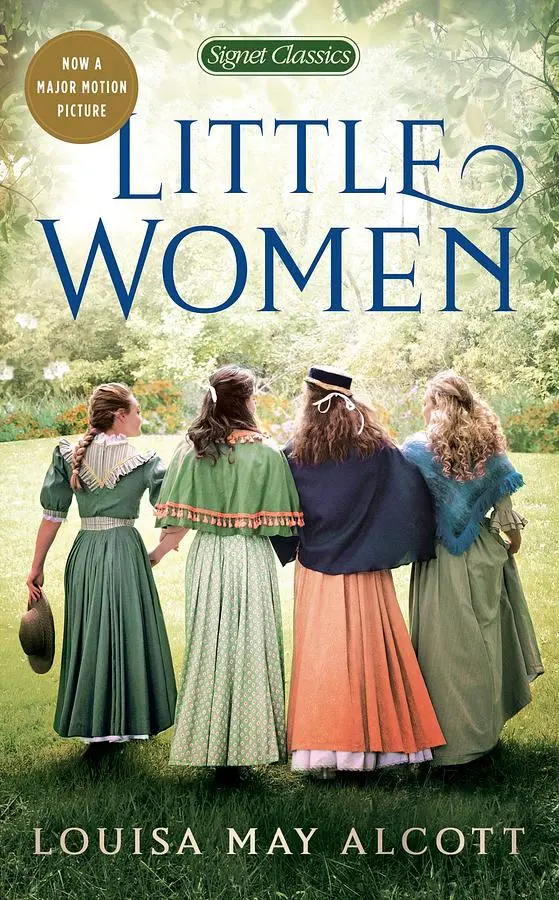 |
The coming-of-age journey of the four March sisters—Meg, Jo, Beth, and Amy—is the focus of Louisa May Alcott's Little Women. Published in the late 1860s and set during the American Civil War, this classic novel has been cherished by readers for more than a century as it follows the sisters' transition from childhood into womanhood. Despite its 19th-century setting, the book remains popular with modern audiences due to its memorable characters, clear writing, and universal themes of family, independence, and self-discovery.
The story begins with the March family facing financial difficulties while their father is away serving as a chaplain in the war. Guided by their devoted mother, Marmee, the sisters learn to deal with hardship and discover their own identities. Meg, the eldest, dreams of wealth and beauty but later finds fulfillment in marriage and domestic life. Jo, energetic and independent, wishes to become a writer and struggles against society’s expectations for women. Beth, shy and gentle, embodies kindness and selflessness, but her illness and early death leave a lasting mark on the family. Amy, the youngest, starts as spoiled and vain, yet gradually matures into a talented and thoughtful woman. Through these journeys, the novel shows how ordinary experiences such as work, illness, marriage, and loss shape the characters and guide them toward maturity.
One reason the novel is highly recommended today is its realistic characters. The March sisters are not presented as perfect models but as individuals who make mistakes, learn lessons, and grow over time. Jo’s temper, Amy’s vanity, Meg’s struggles with responsibility, and Beth’s fragility all highlight the challenges of becoming an adult. Readers can easily identify with these flaws and struggles, which makes the novel relatable even across cultural and historical differences.
Another strength of Little Women is its balanced moral message. Alcott wanted to write a story that was both entertaining and instructive, but she avoids preaching. Instead, the sisters’ moral lessons come through daily life: Meg learns humility, Jo learns discipline, Amy learns maturity, and Beth shows the quiet power of kindness. These lessons are gentle yet meaningful, reminding readers that growth is achieved step by step, not instantly.
The book is also special because of how it deals with choices for women. Jo March is a great example of independence because she doesn't follow the traditional rules for women and focuses on her writing. At the same time, the book shows that the other sisters' lives are just as important. By showing Meg, Amy, and Beth finding happiness in different ways, Little Women makes the point that being a woman is about personal choice, not one set path. This idea was ahead of its time and is why the book still feels relevant.
Family and community form another central theme of the novel. The March household, though modest, is full of warmth and mutual support. The sisters quarrel, compete, and sometimes disappoint each other, but they also reconcile, encourage one another, and share joys and sorrows. Their unity demonstrates that happiness and strength can exist even in difficult circumstances. This message is especially powerful in today’s world, where individual success is often emphasized over family connections.
The cultural influence of Little Women is undeniable. As one of the first American novels to focus on the daily lives of young women, it helped open the way for more complex female characters in literature. The story has been adapted many times in film, theater, and television, with each version showing that its themes continue to speak to new generations. Its ability to inspire readers and artists for more than 150 years proves its lasting value.
For modern readers, Little Women remains both relevant and inspiring. The struggles of balancing ambition with duty, confronting social expectations, and facing loss are universal experiences. Jo’s independence, Meg’s realism, Amy’s ambition, and Beth’s kindness each reflect aspects of human life that readers continue to encounter today. By combining these individual journeys with a strong sense of family and morality, the novel creates a work that feels both personal and universal.
In conclusion, Louisa May Alcott’s Little Women is not only an important piece of nineteenth-century literature but also a timeless exploration of human growth. Its clear style, realistic characters, and moral depth make it accessible to students and general readers alike. Its themes of family, ambition, and independence ensure that it continues to have meaning in the twenty-first century. For these reasons, Little Women deserves strong recommendation as a book that can educate, inspire, and move readers of all ages.
|
| 高雄市私立大榮中學 |
黃〇惠 |
Small Things Like These
【書籍介紹】
書名/Small Things Like These推薦者/高雄市私立大榮中學‧黃〇惠內容簡介:
|
 |
In the very cold winter of 1985, a small town in Ireland was getting ready for Christmas, but something dark was happening. It was so cold that you could feel it everywhere. The cold came from the icy river and left frost on all the windows. The air always smelled like coal smoke because everyone was trying to stay warm. On the outside, the town looked happy and festive with shiny decorations and Christmas carols. But underneath all the holiday cheer, people felt worried. It was a secret that everyone knew about but agreed not to talk about.
Bill Furlong, who sells coal and wood, was a good, honest man who people could rely on. He lived a simple life, working hard to take care of his family. Every morning, he got up early to work, and his hands were always dirty with soot. He knew how important it was to be warm because he had a difficult childhood. He was born to a single mother, but a kind, wealthy woman helped raise him. Because of this, he worked hard and was thankful for the life he had. His life centered around his family: his wife, Eileen, and their five lively daughters in their cozy, bustling home. His home was his safe and happy place, protecting him from the tough parts of life.
But at the edge of town, there was a convent, which is a home for nuns. The religious community regarded it with a mix of fear and respect. It had high stone walls and iron gates that made it seem separate from the rest of the world. In Ireland at that time, the Church had complete power, and nobody dared to question it. The nuns at the convent also ran the town's laundry service. So even though the convent was a part of the town, no one really knew what happened inside.
People whispered about the convent. They said it was a home for young women who had "gotten into trouble," like having a baby without being married. It was called a school, but people said it was really a place for strict punishment. There were stories that some girls who went in never came out, and that babies were born there and then taken away secretly. For years, Bill ignored these rumors. He thought it was easier to mind his own business. Like everyone else, he was part of the town's unspoken agreement to stay quiet.
But his peaceful life was about to be shattered. One cold morning while making a delivery, he had a brief, terrible encounter that forced him to see the truth. In the convent's dark and cold coal shed, he saw a young woman who was so desperate and sad it scared him more than the cold. He saw suffering in a place that was supposed to be holy. This bothered his conscience, and he could no longer ignore what the whole town was pretending not to see. The memory of her terrified face stuck in his head, and he couldn't forget it.
As Christmas got closer, what he had seen felt heavier on his mind. The town's cheerful Christmas lights seemed to make fun of the terrible secret he knew was hiding nearby. If he interfered or asked questions, he would be going against the Church. That would risk his family's safety, his good name, and his place in the small community. His wife warned him to stay out of it. His neighbors looked away when they saw him, sending the same message. But if he stayed quiet, he felt he would be letting himself down and helping something cruel to continue.
Claire Keegan's book, Small Things Like These, is a very emotional story about one man's courage to do the right thing when everyone else is staying quiet. It's a story about why people are afraid to speak up and what happens when they don't. It shows that even normal people can be heroes. Bill has to make a difficult choice between doing what everyone else does to stay safe, or following his own conscience. The story confronts us with an important, enduring dilemma: when a community chooses ignorance, what does it take for one person to uphold what is right?
|
| 中山高中 |
葉〇汝 |
The Wizard of Oz
【書籍介紹】
書名/The Wizard of Oz推薦者/中山高中‧葉〇汝內容簡介:
|
 |
One day in Kansas, Dorothy and her dog Toto were blown away by a strong cyclone. The wind was so powerful that it lifted their house high into the sky and carried it far away. When the house finally landed, Dorothy looked around and found herself in a strange and colorful land. The sky was bright, the grass was greener than she had ever seen, and many small people were staring at her with surprise. Dorothy wanted to go home, so she started her journey.On the way, Dorothy met the Scarecrow who wanted a brain, the Tin Man who needed a heart, and the Cowardly Lion who wished for courage. The Scarecrow was friendly but not clever because his head was full of straw.The Tin Man’s body was made of silver metal, and when he walked,he made a funny sound . The Lion, although big and strong, always shook with fear. They became good friends and decided to visit the Wizard of Oz together, because they all believed he could give them what they wanted.During their journey, they faced many dangers. One day, they had to cross a dark forest. Strange noises came from the trees, and the wind whispered around them like ghosts. The Lion was trembling, but Dorothy said softly, “Don’t be afraid. We’ll get through this together.” Her calm voice gave everyone courage. Another time, they came to a wide river. The Tin Man built a raft, and the Scarecrow helped push it into the water. In the middle of the river, the current grew stronger, and Toto nearly fell into the water. Dorothy quickly grabbed him and held him tight. They finally reached the other side safely, more united than before.At last, they arrived at the Emerald City, which was shining bright with green light. The Wizard’s palace was tall and grand, and everyone had to wear green glasses when they entered . The Wizard appeared to each of them in a different form—sometimes as a great head, sometimes as a ball of fire. He told them that if they wanted his help, they must kill the Wicked Witch of the West. Although they were scared, they agreed and started a new journey.The Witch’s castle was full of flying monkeys and soldiers. When the Witch saw Dorothy’s silver shoes, she became angry and tried to take them away. Dorothy threw a bucket of water on her, the Witch began to melt, screaming until she disappeared. Later, they returned to the Wizard to ask for their wishes. However, they soon discovered that the Wizard was only an ordinary man who played tricks behind the scenes. Although he had no real magic, he still gave them hope and confidence. The Scarecrow learned that he already had wisdom, the Tin Man found that his heart was kind, and the Lion realized that he had brave enough after the adventure . Finally, Dorothy learned the way back and returned to Kansas safe and sound.When Dorothy faced many challenges in The Wizard of Oz, she never gave up hope. She always followed her goal—to go back to Kansas. I admire her very much because she is brave and calm. These qualities make her strong, and they also teach me an important lesson.When I was a child, I felt brave and confident, but after growing up, I started to become weak and afraid. If I met the same situation as Dorothy, I might give up quickly and easily. However, I want to learn from her spirit: to keep hope in my heart and face my fears step by step.
|
| 瑞祥高中 |
吳〇妤 |
WONDER
【書籍介紹】
書名/WONDER推薦者/瑞祥高中‧吳〇妤內容簡介:
|
 |
R.J. Palacio was deeply moved by the reaction of a disabled little girl she met at an ice cream shop, which inspired her to write the story of Auggie.
WONDER tells the story of Auggie, a boy born with a facial defect who overcomes numerous obstacles and bravely attends a regular school. The book, told from the perspectives of multiple characters—his parents, his sister Via, his friend Jack, and Auggie himself—creates a rich narrative, depicting how Auggie's presence impacts those around him and exploring themes of learning, courage, and kindness.
After reading the book, I felt that Auggie truly bravely faced everything. Initially, he feared being teased by his classmates because of his facial defect, but gradually, he became friends with Summer and Jack. Just when I thought his life was about to begin anew, on Halloween, the day he had been looking forward to the most, he unexpectedly overheard Jack and other classmates mocking him behind his back. Seeing this, I felt sad and disappointed for him.
But later, Auggie reconciled with his friends, and when he was bullied by other students, Jack and others stood up for him. At the end-of-term awards ceremony, Auggie no longer wore the space helmet his father had given him, but stood on the stage with a confident smile. I was happy for him, too. After all, this journey hasn't been easy, and I sincerely admire his perseverance.
In the story, Via, the older sister, was often neglected because her parents were focused on her younger brother. Yet, she loved him dearly, supporting him in everything he did and showering him with love. This was deeply heartwarming. After all, it's not something everyone can do. It requires a great deal of care, sometimes even sacrificing one's own needs to alleviate their parents' worries. To me, she is truly remarkable.
As for Auggie's parents, they were even more remarkable. After Auggie was born, they saw his face and didn't give up on him. They accompanied him through 27 surgeries, allowing him to hear and see. Before Auggie left for school, they constantly encouraged him, asking his classmates to show him around the campus and teaching him how to get along. This ultimately helped Auggie overcome his fear of public opinion, overcome numerous obstacles, and become the brightest star on campus, deeply influencing everyone. Life is full of flaws, and not everyone is perfect. Take Auggie, for example. He was born with a facial defect that caused him considerable distress. Yet, his family constantly gave him confidence, supported him through depression and loss, and encouraged him in every way they could. His mother even gave up her degree to stay home with him to study. This made me feel the overwhelming love they gave him, and it was very heartwarming.
Auggie's story gave me a profound understanding of how to face adversity. One line in particular stood out: "When given the choice between being right or being kind, choose kind." No matter what, we should treat others with kindness and avoid making fun of others' appearance. Otherwise, we will hurt others and become the perpetrators. Treating others with kindness, no matter what, is a profound lesson I learned after reading this book.
|
| 高雄市中山高中 |
俞〇廷 |
A Christmas Carol
【書籍介紹】
書名/A Christmas Carol推薦者/高雄市中山高中‧俞〇廷內容簡介:
|
 |
“A Christmas Carol” is a famous novella by Charles Dickens. It tells a story of a stubborn old man called Ebenezer Scrooge. The only thing he cares about is money. He lives alone, counts money everyday, and treats everyone around him meanly. He thinks that celebrating Christmas is a humbug. On Christmas Eve, Scrooge’s nephew, Fred, invites him to a family dinner, but Scrooge refuses, for it is just wasting time and money to him. Later, two men come and ask if Scrooge would like to help the poor by donating some money. Scrooge refuses angrily and shouts that the poor should go to prison or workhouses. At his office, his clerk, Bob Cratchit, works in a small, cold room without enough coal for fire. That night, Scrooge’s dead business partner, Jacob Marley, comes to his house. Both of them love only money and are not willing to help others. Marley warns Scrooge that three Christmas spirits will come to meet him.
After a while, the ghost of Christmas Past comes to meet him, taking him on a journey to his past memories. Scrooge sees his lonely childhood, his kind sister, and his first job. He also witnesses his fiancée, who leaves him because he cares more about money and job than her. Seeing these past memories makes Scrooge regret. The second one, the ghost of Christmas Present, shows him the joyfulness in every family. Families gather with smiles on their faces, sharing food and love. Finally, the ghost of Christmas Future reveals a dark future. Scrooge sees people laughing about a man’s death. When Scrooge looks at the gravestone, he realizes that the dead man is himself. He begs the spirit to give him a chance to change. In the end, Scrooge learns an important lesson about kindness and becomes a better man.He sends a large turkey to the Cratchit family, and donates money to the charity.Furthermore, he joins his nephew Fred’s Christmas celebration. From that day on, Ebenezer Scrooge has transformed into a man of empathy and joy, proving that it is never too late to change.
After reading the book, I find it important to reflect on the mistakes we have made and work hard to fix them. As the story shows in the beginning, the ghost of Christmas Past shows Scrooge his past, where he sees that he loses his favorite girl. He feels so much pain, so he asks the spirit to take him home. Later, the ghost of Christmas Present shows him every happy family, and the ghost of Christmas Future shows his lonely grave. He finally realizes that he has to change. In the end, he gives Bob a big turkey, helps the poor, and says “Merry Christmas” to everyone. He feels truly happy. Everyone can change if they want to. Once someone becomes aware of their past mistakes, they will get the chance to find true happiness! Just as it says in the book: “The future was his own, to change his life in!”
|
| 仁武高中 |
高〇呈 |
The Ink Drinker
【書籍介紹】
書名/The Ink Drinker推薦者/仁武高中‧高〇呈內容簡介:
|
 |
In many horror movies or stories, vampires usually make people feel scared and terrified. They hide in the dark, bite people’s necks, and drink their blood. However, have you ever seen a vampire that doesn’t drink blood? The book I’m going to introduce is about a vampire who doesn’t drink blood at all—The Ink Drinker.
The main character of this book is a young boy whose father runs a bookstore. He always feels bored while looking after the shop, but everything changes when a strange-looking customer walks in. The man has a gray complexion and bristly eyebrows, and he moves as if floating like a ghost.
What’s even stranger is that this customer is not only odd in appearance, but his behavior is even more unusual. He paces back and forth in the bookstore, and after picking up a book, he starts drinking the ink from its pages. This terrifies the main character, making him think that he might be hallucinating.
When the customer realizes that the main character has discovered his secret, he floats out of the bookstore like a ghost. At first, the boy feels frightened and confused. He can’t believe what he just saw. But soon, his curiosity grows stronger than his fear, pushing him to follow the strange man.
Curious about why the customer drinks ink from books, he follows him to a cemetery. The cemetery is silent, with only the sound of the wind blowing through the trees. As he walks deeper underground, the air becomes colder and the light dimmer. Dusty books are piled everywhere, and a pen-shaped coffin glows faintly in the dark. It’s both creepy and fascinating at the same time. In the dim underground area, he discovers that the strange customer is sleeping in the pen-shaped coffin.
The customer then wakes up and asks why the boy followed him. The boy explains that he saw him drinking the ink from books. The customer explains that he isn’t a vampire who drinks blood, but one who loves to drink ink. He also mentions that the sentences and words in books taste like brownies. Fortunately, the customer is not a violent vampire. In the end, the main character only has the vampire’s name, “Draculink,” etched lightly on his arm with the vampire’s nib-like teeth.
The Ink Drinker is a story that combines humor, fantasy, and a moral lesson. It turns the common idea of a frightening vampire into something completely new and imaginative. The author’s creativity shows that even monsters can have gentle hearts and that appearances can be misleading.
This story is not only creative and funny, but it also carries a deeper message. It made me think about how people often misunderstand others simply because they look or act differently. In the story, the vampire looks scary and unusual, but he is not violent at all. Even though his personality is a bit odd, he isn’t evil. He is just different. Many times in real life, people are quick to judge others based on their appearance or habits, without trying to understand them first. This book reminds me that everyone has their own story and that kindness and understanding are more important than fear or prejudice.
Overall, The Ink Drinker is a fun, heartwarming, and thought-provoking story. If you enjoy reading or are fascinated by vampire tales, you will surely fall in love with its meaningful and imaginative plot. The story not only makes readers laugh but also encourages them to reflect on the importance of not judging others by their appearance. It challenges the traditional image of vampires and offers a refreshing new perspective. Both children and adults can gain different yet equally meaningful insights from this unique and charming story.
|
| 高雄女中 |
蔡〇宸 |
A First Time for Everything
【書籍介紹】
書名/A First Time for Everything 推薦者/高雄女中‧蔡〇宸內容簡介:
|
 |
Is there a memorable “first time” in your life? A First Time for Everything, written by Dan Santat, is a graphic novel memoir sharing several of the author’s first experiences from his adolescence. Honored as the winner of the National Book Award, Dan reconstructed his ninth-grade self through natural and relatable language and perfectly captured a frame of mind much like that of many teenagers. Dan grew up in a small town outside of Los Angeles, living a simple life as an only child. He was used to being the kind of kid everyone calls “good,” listening to teachers and staying out of trouble, which shaped him into a cautious and introverted person. “I want to be small, I want to be invisible,” Dan said. He had low expectations for everything, including a three-week study tour to Europe that his parents registered him for. But nobody knew that this journey to Europe was about to make a big difference for Dan.
As an introverted boy who preferred staying in his comfort zone, traveling to Europe with unfamiliar students sounded like a nightmare to Dan. What’s worse, three teasing girls seemed to enjoy making fun of him, giving him plenty of embarrassing moments not only at the start but throughout the whole trip. Thankfully, he soon found two friendly guys to hang out with, who kept him company and always stood by his side during those uncertain three weeks in Europe. As the journey went on, they visited a few neighboring countries around France, and a series of firsts started to change him: the first time drinking beer in Munich (though he was under fourteen), the first Fanta he had ever tried, the first time discovering that in Paris, the breadsticks offered on the tables were not free after all, and the first time dancing at a nightclub with not only his buddy but also new local friends he tried to make in Salzburg. All of these unfamiliar yet exciting experiences awakened something in him, opening his heart to develop a deeper connection with others—and with someone he loved.
A First Time for Everything tells Dan Santat’s teenage story, filled with funny, embarrassing, and true-to-life moments that each of us might have come across when we were young. The book traces his transformation: from staying in his own comfort zone to daring to cross a few lines and try something new; from secretly having a crush on someone to openly expressing love to a girl. Dan’s story reminds every teenager that even the smallest steps outside our comfort zone can lead to the most unforgettable memories. Highly recommended for dreamers, overthinkers, and anyone who has ever been afraid to take their first step.
|
| 瑞祥高中 |
陳〇暄 |
Harry Potter and the Sorcerer’s Stone
【書籍介紹】
書名/Harry Potter and the Sorcerer’s Stone推薦者/瑞祥高中‧陳〇暄內容簡介:
|
 |
Harry Potter is a young boy who lives in a tiny closet at the foot of the stairs. He lives with the Dursleys, a horrible family who gives him little love and attention. Harry believes he is just a normal boy, but everything begins to change when a giant with long shaggy hair and a wild, tangled beard named Hagrid tells him that he is a wizard. Hagrid also explains that Harry’s parents were powerful wizards but were killed by the dark and evil wizard in the magical world, Lord Voldemort.However why did Harry survive? No one knows. Another mystery is that Voldemort disappeared after killing Harry’s parents. Since then, Harry has become famous and known as “the Boy Who Lived.”
Hagrid takes Harry to Hogwarts, a school for witchcraft and wizardry, where he starts his first year of magical education. At school, he is sorted into Gryffindor, a house known for bravery. He quickly becomes friends with a red-haired boy, Ron Weasley, and a knowledgeable girl with bushy hair, Hermione Granger. They attend classes together, such as Potions, Charms, and Defense Against the Dark Arts. Hogwarts is full of magic: moving staircases, the Fat Lady, a portrait that can move and talk, floating candles, and magical creatures, but Hogwarts also holds many secrets.
During the school year, Harry and his friends discover something incredible: the Sorcerer’s Stone, a magical object that can turn any metal into gold and grant immortality. They learn that someone is planning to steal it, and they suspect Professor Snape, who seems to dislike Harry. With teamwork, Harry and his friends try to solve the mystery. They face Hagrid’s three-headed dog, deadly plants, and a giant chess game arranged by Professor McGonagall.
In the end, Harry is shocked when he sees Professor Quirrell, their Defense Against the Dark Arts teacher, standing in front of him. It turns out that the person who wants to steal the Sorcerer’s Stone is not Professor Snape, but Professor Quirrell! Quirrell is secretly working for Voldemort, helping him steal the Stone to regain his power. Harry bravely confronts Quirrell and Voldemort, protecting the Stone and saving the wizarding world from darkness.
Harry returns to the Dursleys for the summer. Although Dursleys house is a horrible place, Hogwarts will always be his true home.
When I first read Harry Potter and the Sorcerer’s Stone, I felt as if I had entered the story and become part of the magical world. The author describes every scene vividly with great imagination,such as the moving staircases, the talking portraits, and the special classes.Vivid description makes me feel as if I am following Harry to Hogwarts and solving the mysteries with him.
The most impressive part was when Ron, during the giant wizard’s chess game, decided to sacrifice himself so that Harry could move forward to protect the Sorcerer’s Stone. The tense atmosphere made me nervous, and I was afraid that any one of them might die. Another memorable moment is when Professor Quirrell took off his turban; the nervous feeling and the shocking truth under the turban really surprised me. Luckily, Harry saved the Stone and the story had a happy ending.
Reading Harry Potter and the Sorcerer’s Stone teaches me important lessons. When Harry, Ron, and Hermione work together to solve the mystery of the Sorcerer’s Stone, it shows the importance of teamwork and trust, which inspires me that we don’t have to face struggles on our own—friends can help and give advice. Another lesson is to stay true to oneself and believe in kindness even in difficult times.
To me, Harry Potter is a book full of wonder and emotion. It is a book that everyone should read.
|
| 高雄市立高雄女子 高級中學 |
林〇汝 |
The Janitor's Boy
【書籍介紹】
書名/The Janitor's Boy推薦者/高雄市立高雄女子 高級中學‧林〇汝內容簡介:
|
 |
Recently, I read a book called The Janitor’s Boy by Andrew Clements. It is one of those books I can read over and over and over again. Whenever I feel kind of lost or have trouble dealing with relationships, I pick it up again, and it always give me new insights and help me calm down one more time.
Now I’m going to talk about “Jack’s Problem: Embarrassment and Revenge.” The main character is Jack Rankin, who is a fifth-grade boy. He has a very sensitive nose, so he can smell what’s for lunch as soon as he reaches the school gate. Also, he can smell the old gum stuck under the desks. Jack’s father works as a janitor at his school. Because of his father's job title, Jack is often teased by his classmates. Out of anger and embarrassment, he decides to get revenge on his dad.
Jack comes up with a plan: he collects thirteen pieces of chewing gum. He chews one or two pieces each class period and keeps them soft in a plastic bag with some water. During music class, he sticks all the gum under a desk in a big “X”.
However, he gets caught by his teacher and is sent to the principal’s office. As punishment, he has to stay after school as a “gum patrol officer” for one hour every day for three weeks.
At first, he is assigned to clean the thirteen pieces of gum he stuck himself, and that’s when he realizes how hard it is to scrape gum off. Later, he is sent to clean gum in the library, where he begins to understand how tough his father’s job really is. Through this experience, he starts to see things from his father’s perspective and slowly changes his feelings toward his father.
Next, I’d like to talk about “The Secret Tunnel and the Revelation.” The story continues when Jack is returning tools to the janitor’s room one day. He notices an old gray wooden cabinet with a loose brass lock. Inside, he finds all the school’s keys. He secretly “borrows” two of them: one for the clock tower and the other for the steam tunnel.
He first visits the clock tower, where he enjoys the view of the whole town and does his homework by the big clock’s beam. Later, while cleaning the auditorium stage, he trips over a wooden sword hidden under the curtain. When he lifts the curtain, he discovers a door labeled “Entrance”. His instinct tells him to try the steam tunnel key, and it fits. He steps into total darkness, holding the wooden sword for safety. Suddenly, Jack realizes the key is still outside and he’s locked in the tunnel.
Shouting for help in vain, he smells something familiar:the scent of watermelon gum. Following the smell, he surprisingly finds a young man living deep inside the tunnel. The man tells Jack that his father allow him to stay there temporarily because he was having problems at home. Jack finally realizes that his dad is actually a very kind and caring person.
The young man helps Jack find the exit, which turns out to be far from school. When Jack returns, his father is already waiting for him at the school gate. On the way home, his dad explains why he chose to be a janitor, and Jack finally understands him.
Finally, I would like to focus on the key themes of the story:respect, growth, and communication. This book explores the relationship between parents and children. It teaches us that every job deserves respect. Sometimes, when we don’t understand our parents’ work, we might feel angry or embarrassed, but that’s only because we don’t see things from their perspective. There is no “high” or “low” between jobs.Communication between parents and children is the key to understanding and love.
Personally, I was really touched by Jack’s growth. At first, he was selfish, stubborn, and easily influenced by what others said. He felt ashamed of his father’s job just because his classmates laughed at him. However after experiencing the cleaning work himself and learning more about his father, he started to see the meaning behind what his dad did every day. I think this change is something many of us can relate to. When we are young, we often take what our parents do for granted and don’t realize how hard they work for us.
Another thing I like about this book is how the characters' feelings reflect in my mind. Jack is not a perfect boy. He makes mistakes , loses his temper, and feels embarrassed, but that’s what makes him so believable. His father is also not portrayed as a hero, but as an ordinary man who works quietly and does his best. Through their conflict and reconciliation, the author shows that understanding and respect are built through experience and time, not just words.
This story also made me think about our society’s attitude toward jobs. Many people look down on janitors, cleaners , or other blue-collar workers, but without them, our schools and cities couldn’t function properly. It reminded me that respect should not depend on what someone does for a living but on the effort and honesty they put into it. Everyone contributes to the society in their own way.
After finishing the book, I understood why it has stayed with me for so long. It doesn’t just tell a story about a boy and his father. Instead, it teaches readers about empathy, humility, and appreciation. Whenever I feel misunderstood by my parents or think they don’t understand me, I recall Jack’s story. It reminds me to look deeper, to communicate more, and to try to understand before judging.
The Janitor’s Boy may look like a simple children’s book, but it actually carries a strong message about family and respect. That’s why I will keep rereading it whenever I feel lost. It always brings me warmth and helps me remember what truly matters:understanding, love, and gratitude toward the people who care for us the most. It also encourages me to express my feelings bravely, cherish every moment with my family, and never take their love about granted.
|
| 道明中學 |
趙〇恩 |
Dead Poets Society
【書籍介紹】
書名/Dead Poets Society 推薦者/道明中學‧趙〇恩內容簡介:
|
 |
Originally written as a script for a screenplay by Tom Schulman, “Dead Poets Society” was later novelized by N.H. Kleinbaum between 1988 and 1989.
The story follows Todd Anderson, a shy teenage boy under the pressure of his parents’ expectations to make him live up to his older brother’s legacy while navigating life at Welton Academy. At the academy, Todd met his roommate, Neil Perry, who had a similar situation at home. Both boys, along with other boys they met on the way—Knox Overstreet, Richard Cameron, Steven Meeks, Gerard Pitts, and Charlie Dalton—attended the English class taught by the new teacher, Mr. Keating, together. During class, Keating not only told the boys they may refer to him as “‘O Captain! My Captain!” other then “Mr. Keating” but also told them “Carpe Diem”, which is Latin for “seize the day”, encouraging the boys to chase after their dreams. One day, Neil found an old annual of Welton Academy with Mr. Keating in it. Intrigued, the boys looked through the listed information and stumbled upon a foreign concept known as the “Dead Poets Society”. Originally, Neil was going to take the annual with him to do a little research. However, before the group reached their dorms, they met Mr. Keating on the way. Out of curiosity, Neil called after Mr. Keating, hoping to learn more about the so-called “Dead Poets Society”. After making sure no one was eavesdropping, Keating told the boys that the “Dead Poets Society” was a secret organization hidden from authority figures and that the club was dedicated to “sucking the marrow out of life”. To do so, the members would gather in an old cave near a pond a few miles away from school grounds to recite poetry. Interested in the idea, Neil suggested that the group resurrect the “Dead Poets Society” together. At first, Todd was especially reluctant to join because he was afraid of speaking in front of everyone. Fortunately, Neil managed to convince Todd to go with them in the end. Later that night, the group of friends snuck their way out of the school grounds and figured their way to the cave Keating was talking about. In the cave, they held their first club meeting then proceeded to read poems and danced to the rhythm late into the night. The next day in English class, Keating told the students to “think in their own ways” and assigned each student to write a poem of their own that would later be delivered aloud in front of the whole class for homework at the end of the lesson. While most boys in the group struggled to find inspiration for their assignments, some, like Knox and Neil, had already found the things they wanted to seize the day for. For Knox, he wanted to swoon Chris, a beautiful girl he met at the dinner party; for Neil, he wanted to be a part of a play. To achieve their goal, both boys made efforts. For instance, Knox took the homework as a chance to write poems expressing his love for Chris and Neil joined the character auction for a school play.
So far the story seemed to be moving in a positive direction, where the boys, despite being in a strict school, had the chance to actually chase their dreams. However, just when everyone seemed to get their happy ending—like Knox, who finally got to be with Chris;Neil, who got to be part of the play; and even Todd, who got to gain confidence in himself—tragedy struck. Neil’s father, Mr. Perry found out that his son joined the play against his wish. Furious, Mr. Perry threatened to enroll Neil in Braden Military school so that he could prepare for Harvard University and a career in medicine. Dreaded by the future that awaited him, Neil decided to take the extreme way out. From then onwards, the story continued with the accusation of Keating’s teaching method that led to the death of Neil Perry and the collapse of the friend group that was caused by disputes over their take on this situation. The story ended on a bitter sweet note, with Mr. Keating leaving Welton Academy while the entire class pays him tribute.
Despite being aware of this classic work, I didn’t actually read until high school. At first, I thought it was just typical school fiction following a group of friends through their high school years, so I began the book expecting a lighthearted ending. Little did I know, “Dead Poets Society” took quite the dark turn. Therefore, I would say that I have read this book at the right time. Being a high school student not only allows you to understand the characters’ situation better but also because it is the age where individuals are mature enough to understand the meaning behind this story.
|
| 瑞祥高中 |
許〇怡 |
The Evolution of Calpurina Tate
【書籍介紹】
書名/The Evolution of Calpurina Tate推薦者/瑞祥高中‧許〇怡內容簡介:
|
 |
The Evolution of Calpurina Tate
By Jacqueline Kelly
Calpurina “Callie” Tate is somewhat different from others. Being the only girl in seven children, her mother had high expectations for her to be a lady, as women were expected to learn domestic skills and get married at that time.
She didn’t think much of it until she met her grandfather, who brought her into the science world. Inevitably she developed a great interest in science and decided to be a scientist.
But this idea was not widely accepted at that time when the world was teetering between old traditions and new discoveries.
She started wondering if she should live up to her parents–and the society’s expectations, or insist on pursuing her own dream.
At first glance, Calpurnia, or “Callie Vee,” seems like any other eleven-year-old girl living in a small town at the turn of the century. She is the middle child among six brothers, expected by her mother to learn the arts of knitting, cooking, and managing a household. But Calpurnia’s heart beats to a different rhythm. She is fascinated by the world around her—the behavior of grasshoppers, the patterns of river currents, the way plants grow differently depending on where they are rooted. Her endless curiosity is not a childish whim; it’s the spark of a young scientist in the making.
Her closest ally becomes her grandfather, a bearded, mysterious figure who at first seems distant but soon reveals himself as a kindred spirit.
He recognizes Calpurnia’s curiosity for what it is: brilliance waiting to be nurtured. Their relationship forms the heart of the story. Together, they explore nature, conduct experiments, and even make a small scientific discovery—the identification of a new species of plant.
What makes The Evolution of Calpurnia Tate so remarkable is how gently but firmly it challenges the boundaries placed on girls of that era. Through subtle dialogue and quiet moments, Jacqueline Kelly paints a vivid picture of a world that insists on conformity. Calpurnia’s mother constantly reminds her that “a lady must know how to cook,” while her brothers freely roam and dream without restraint. The injustice is not screamed; it is whispered in the background of every scene.
Reading Calpurnia’s story made me realize how revolutionary curiosity can be. In her time, asking questions was almost an act of rebellion for a girl. Every time Calpurnia wonders why something happens or challenges what she’s told, she is pushing against the invisible walls that society has built around her. As a modern reader, I found myself reflecting on how those walls still exist today—sometimes in different forms, sometimes in subtler ways. The book doesn’t just tell the story of a girl growing up; it asks us all to examine the cages we build for ourselves and others.
The writing itself feels like a blend of science and poetry, as the descriptions of nature are lush and tactile: you can almost feel the humidity of a Texas summer, hear the buzz of cicadas, and smell the damp earth after rain. At the same time, the tone is light, humorous, and filled with the awkward honesty of a growing girl.
The title, The Evolution of Calpurnia Tate, captures more than one meaning. On one hand, it reflects Calpurnia’s personal growth—her “evolution” from a curious child to a young woman aware of her potential and her constraints. On the other hand, it connects to the broader theme of evolution itself, the scientific theory that fascinated her and scandalized many during her time. Grandfather introduces her to Darwin’s On the Origin of Species, a book banned in some circles but revolutionary in its ideas. Calpurnia’s intellectual awakening parallels humanity’s awakening to new ways of thinking—a brilliant metaphor that showed throughout the novel.
What struck me most deeply was how the novel balances hope and frustration. Calpurnia’s dream is to become a scientist, but she lives in a time when women are expected to marry, not to publish scientific papers. There’s a scene near the end where she realizes that her future may not be entirely her own—that her mother’s plans for her might win out. It’s a heartbreaking moment, but not a hopeless one. It doesn’t promise a fairy-tale ending, and that’s what makes it beautiful.
In many ways, Calpurnia reminded me of myself and many people I know—the feeling of wanting more than what others expect from you, the quiet battle to carve your own path. Reading her story encouraged me to look at the world differently, to ask questions even when answers are uncomfortable, and to believe that curiosity itself is an act of courage.
The book also makes a subtle but powerful statement about mentorship and family. Calpurnia’s grandfather doesn’t simply give her answers; he teaches her how to seek them. Their bond is not sentimental—it’s built on mutual respect, intellectual companionship, and shared wonder. That kind of relationship, where an elder empowers rather than controls, feels rare and deeply moving. It reminded me that real teaching is not about telling someone what to think, but showing them how to think.
By the end of the novel, Calpurnia hasn’t completely escaped her circumstances—but she has changed them from within. She has learned to see herself as capable, intelligent, and worthy of discovery. That realization, in itself, is revolutionary. The choice to leave the story open-ended feels deliberate, as if inviting readers to carry Calpurnia’s spirit forward—to continue her evolution in their own lives.
The Evolution of Calpurnia Tate is more than historical fiction; it’s a gentle manifesto for curiosity and courage. It reminds us that every question, no matter how small, can lead to change. It teaches that science and wonder belong to everyone, not just to those allowed by society to pursue them. And most of all, it celebrates the bravery it takes to be different—to look at the world, ask “why?”, and refuse to accept “because” as an answer.
In the end, Calpurnia Tate doesn’t just evolve—she inspires us to do the same.
|
| 高雄女中 |
黃〇禎 |
American Prometheus: The Triumph and Tragedy of J. Robert Oppenheimer
【書籍介紹】
書名/American Prometheus: The Triumph and Tragedy of J. Robert Oppenheimer推薦者/高雄女中‧黃〇禎內容簡介:
|
 |
The book American Prometheus: The Triumph and Tragedy of J. Robert Oppenheimer is a biography that tells the story of a scientist’s life mixed with history. It is set during World War II, when scientists in many countries were racing to invent stronger weapons. Oppenheimer was one of the leading physicists in the United States to help develop the atomic bomb. The book describes his life journey from a young man influenced by communist ideas, to “the father of the atomic bomb,” and later he lived with guilt and fear after realizing how much destruction his creation had caused. When the bomb was finally tested successfully, Oppenheimer didn’t feel proud. Instead, he felt deeply guilty. He strongly believed that this kind of powerful weapon should be controlled by the United Nations, not by any single country. He once said that he felt like he had created the wrong power to destroy the world.
Reading this book made me think about how people in history can be both great and tragic at the same time. Oppenheimer was definitely a genius who helped end World War II, but he also carried a heavy burden on his shoulder because his invention killed countless innocent people. His story made me think about how we should use what we know in the right way. If we don’t, it can hurt people.
In recent years, we have more and more wars. The Russia–Ukraine conflict, the war between Israel and Palestine, and the civil war in Syria are all heartbreaking examples. To be honest, I used to think naively that wars only happened in history books. I never thought that wars could really happen today. But when I watch TV now, I see that war is not far away. I am afraid that maybe one day, anyone of us could become the main person in a new war. I can’t believe that it’s so easy to move from watching to becoming part of it.
I once read some data that said only very a few countries in the world, such as Iceland and Switzerland, are completely free from the threat of war. That made me realize that peace is fragile. It is not something we can take for granted; it can disappear anytime because of human greed or political issues.
In the book, Oppenheimer shows how guilty he feels about creating the atomic bomb. His original goal was to help end the war. He believed that his invention would bring peace. However, after he saw what really happened in Hiroshima and Nagasaki and how much people were killed, he changed his mind. He began to call for the control of nuclear weapons and wanted the United Nations to stop any country from using them again. Unfortunately, it was impossible to take such power back. Many countries saw nuclear weapons as a symbol of strength and safety. They believed that having them could prevent other nations from attacking. This belief started an endless arms race, with each country racing to build more bombs than the others.
I can understand Oppenheimer’s feelings of guilt and fear. He created something that changed the world, but not in the way he had hoped. Though he wanted peace, his invention eventually became a tool of destruction. His story shows how difficult it is to balance progress and morality. Just as we know, science can be a double-edged sword. It can either save lives or destroy them, depending on how people use it.
In a way, I think Oppenheimer’s story tells us something important. Sometimes, people only understand how precious peace is after they’ve felt the pain of war. But I really hope that one day, people can learn to be kind and wise without having to fight again. As the ancient saying goes, “The strength of a nation in war lies not in its weapons or land, but in the will of its people.” When people are united and wise, peace has a better chance of surviving.
During Oppenheimer’s time, many scientists were trying to come up with new kinds of technology. Some wanted to make stronger weapons, some worked on faster airplanes, and others focused on better ways to send messages. Oppenheimer was one of them, but he was different. He was very smart and had a special way of leading people, so others started to notice him. The U.S. government also saw his talent and decided to support his work, hoping that his research could help end the war and bring peace back to the world. However, when the war was finally over, Oppenheimer began to realize that peace based on fear and power could never last for long.
After the bomb was used, other countries, especially Russia, felt threatened. They began developing their own nuclear weapons. Soon, both the United States and Russia each had more than five thousand bombs. This created enormous tension and fear around the world. The competition wasted huge amounts of money and resources, while also making the world even more dangerous. What Oppenheimer feared most had already come true.
He once said, “I have blood on my hands.” This short sentence shows his deep pain. He knew that even though he had acted out of duty, he could not escape the guilt of what his invention had caused. If I were in his position, I think I would feel the same way. Imagine spending years creating something meant to protect people, only to see it destroy everything you love. That kind of pain must be unbearable. Instead of being remembered as a hero, he became a symbol of regret. His life shows us that even the smartest people can make decisions that lead to tragedy.
Many things in the world start with good intentions but end in unexpected disasters. Communism, for example, was originally meant to solve the problem of inequality between the rich and the poor. But over time, it gave rise to authoritarian governments that controlled people’s freedom and created new forms of suffering. Similarly, Oppenheimer’s invention began with a dream to end war but instead created fear and division that lasted for generations.
Albert Einstein, another great scientist of the same time, also spoke out against nuclear weapons. He once said, “I don’t know with what weapons World War III will be fought, but World War IV will be fought with sticks and stones.” This quote has always stayed in my mind. It means that if humans destroy the world with advanced weapons, we will eventually go back to the beginning, rebuilding civilization from nothing. It is both a warning and a prediction. Einstein also said that using atomic energy did not make a new problem. It only made the old one worse. What he meant was that people still don’t know how to live peacefully with each other, and now the world is even more dangerous because of powerful weapons.
After reading this book, I began to think about the value of science and technology. I believe that science should help people to have a better life rather than causing more problems. Oppenheimer’s story made me realize that every new discovery needs to be used carefully. I really hope that people in the future can remember this story and learn something from it. I don’t think real progress is about making stronger weapons. It’s more about understanding each other and choosing peace.
|
| 高雄女中 |
林〇臻 |
The Little Prince
【書籍介紹】
書名/The Little Prince推薦者/高雄女中‧林〇臻內容簡介:
|
 |
When I first read The Little Prince, I was an elementary school student. At that time, I thought that it was just a fun and interesting story. The pictures were cute, and the story felt simple. But as I grow older and read it again in tenth grade, I feel different. This time, I could understand more about the story. And I started to notice more about human nature, love, and the loss of innocence.
At the beginning of the story, a little boy shows his drawing of a snake eating an elephant to the adults. But all the adults think it is just an ordinary hat. Many years later, that boy becomes a pilot. One day, his airplane breaks down, so he is stranded in the desert and meets the Little Prince. The Little Prince tells the pilot that he lived on a tiny planet and started traveling because he had a fight with the rose he really loved. Before he came to Earth, he visited six other planets.
On each planet, he met one grown-up. Through these visits, the author used each adult to show a different weakness of human nature. The first three adults represent different forms of desire. On the first planet, he meets a king who thought he could control everything.
The king always made rules just to show how powerful he was. On the second planet, he meets a man who loves to show off. That man only likes to hear people say nice things about him and ignores everything else. The third planet belongs to a tippler, who drinks to forget his shame but ends up trapped in a hopeless cycle. These three adults reflect the endless human pursuit of power, vanity, and escape, which ultimately leads to emptiness.
The next three planets show how some grown-ups can be blind and lonely inside. On the fourth planet, a businessman proudly counts stars, claiming he owns them all. He represents people who mistake possession for meaning, caring more about quantity than beauty. The fifth planet is home to a lamplighter who keeps lighting and extinguishing a lamp without understanding why. He reminds me of times when I also followed routines blindly and did what I was told without thinking about the purpose behind it. On the last planet, the Little Prince meets a man who writes down everything about the world but never goes out to see it himself. He likes knowing things from books, but he doesn’t really understand what the real world looks like. These three characters reflect the loss of curiosity and purpose that often comes with adulthood, showing how people gradually stop questioning the meaning behind what they do.
When the Little Prince finally reaches Earth, he first meets a snake, and then he discovers a garden full of roses. At that moment, he feels sad because he realizes that his own rose is not unique in appearance. Later, a fox appears and asks the Little Prince to tame it. Because of this, the Little Prince learns the meaning of “taming”: forming a bond through time, trust, and patience. Once we have spent our heart on something, it becomes special and irreplaceable. And the fox’s words deeply touched me: “It is only with the heart that one can see rightly; what is essential is invisible to the eyes.”
From the Little Prince and the fox, I learned that real relationships are built on effort and sincerity. Only through genuine connection can we find beauty that others may overlook. Moreover, from the Little Prince’s relationship with the rose, I realized that love is not just dependence but also responsibility. At first, the Little Prince’s love for the rose was full of misunderstanding and pride, but later he understood that love means caring, protecting, and keeping promises. That’s why he still decided to go back to his planet to take care of his rose, even though it meant that he had to say goodbye to his friend.
In addition, two scenes in the book impressed me deeply and made me think about adult life. The first one is about the drawing of a snake eating an elephant, but all the adults thought it was just a hat. And the second is when the Little Prince met six different adults , each one showing a different kind of problem adults have. I noticed that many adults forget how to think like children. They always need reasons for everything and stop using their imagination. But kids can still see things in special ways that adults can’t. Although all adults were once children, most forget what it was like to dream freely. In my opinion, we should preserve the heart of a child even after we grow older. When we care too much about looks or success, we may forget our true purpose and miss the real meaning of life. I’ve also worked hard for my goals and sometimes forgot why I started. But when I think about it, I realize that my simple thoughts as a child often had the best answers. From the second reflection, I saw the author’s satire on power and desire. Adults often pursue fame, control, or wealth, believing these will bring fulfillment. But once they achieve their goals, they often end up lonely and spiritually empty. The Little Prince’s journey across the six planets makes me think of our world today. Many people are too busy chasing money, fame, or power and forget what real happiness or love feels like. It also reminds me not to lose myself in studying or what others expect, but to remember what really matters.
All in all, The Little Prince really taught me a lot of things. It shows the emptiness of fame and money in the adult world and reminds us how important love, honesty, and imagination are. It teaches us to live with both care and kindness, and to see with our hearts, not just our eyes. Maybe in the future, when school life gets really busy, I’ll think about the way I used to see the world as a child. Those childhood thoughts might be the simple truths I need the most one day. They will remind me that even when I grow up, I should never forget how to feel and dream.
|
| 高雄女中 |
邱〇安 |
The Witches
【書籍介紹】
書名/The Witches推薦者/高雄女中‧邱〇安內容簡介:
|
 |
No matter whether you believe it or not, there are witches all around the world. Witches look just like common women, but there are still some ways for people to recognize them. For instance, they wear gloves even on hot summer days; they are all as bald as boiled eggs, so they always wear wigs; the rims of their nostrils are pink and curvy; their spit is blue; and the pupils of a witch’s eyes keep changing color. The last thing you must know is that witches hate children; they see them as pests. What a witch is most concerned about is how to eradicate children from the world. Our story is about a boy and his grandmother. They lived in Norway, which is said to have the most witches in the world. They lived together after the boy’s parents passed away. The boy’s grandmother was an expert in hunting witches and taught him how to tell witches apart from ordinary women. She also told the boy many stories about what happened to those kids who ran into witches accidentally. For example, there was a boy who was turned into a dolphin while swimming in a lake; a girl who disappeared and never returned because a witch took her away while she was playing in the yard; and another child who was turned into a stone statue. During the year they spent together, the boy encountered witches twice. The first time was when he was building a treehouse alone at the top of a conker tree. A strange woman suddenly appeared below and asked him to come down. The boy was frightened. He froze all over for a while and shot up the tree. He escaped successfully that time, but he was not so fortunate the second time. It all started with the boy and his grandmother’s plan to go on vacation at the Hotel Magnificent to relax and unwind, as the doctor had advised. His grandmother bought him two mice as pets on their way to the Hotel Magnificent, so he started to train them in their hotel room. His training plan was soon interrupted by the hotel manager because of public health concerns. To achieve his dream of becoming a great mouse trainer, the boy started looking for a new place to train where he wouldn’t be found by the manager. He quickly found an excellent empty conference room and thought he was lucky. However, the conference room had actually been booked by the witches for their annual meeting about how to make children disappear from the world. The witches pretended to be members of the Royal Society for the Prevention of Cruelty to Children. The boy was trapped in a room full of witches and faced a life-or-death situation. He was found by the witches when the gathering was about to end. After that, the witches used a potion to turn him into a mouse. Even so, he was not an ordinary, boring little mouse—he still had his human mind. Another thing was that the boy had overheard the witches’ latest scheme—to use a magical potion called Formula 86: Delayed-Action Mouse-Maker to turn children into mice, just like what they had done to him. The boy and his grandmother came up with a plan to eradicate the witches in the hotel. First of all, they stole several bottles of the potion from the Grand High Witch’s room. Then, the boy sneaked into the hotel kitchen and poured an entire bottle of the potion into the soup that the witches had ordered. The boy and his grandmother waited quietly in the hotel restaurant. As they expected, all the witches turned into mice after eating the soup. The boy and his grandmother left the hotel with the great triumph they had achieved together. However, their story didn’t end there—they were planning to make all the witches in the world disappear using Formula 86: Delayed-Action Mouse-Maker. They were determined to accomplish their goal step by step.
After reading this book, I truly admired the author’s writing skills. The story gave me goosebumps every time when it described how the witches used cruel ways to torture children. The author also had an extremely rich vocabulary. The way he described the scenes made me feel as if he were right there, witnessing everything himself.
One of the main themes of the story is the deep relationship between the boy and his grandmother: how they encouraged each other even when facing difficult times, how they rebuilt their lives, and how they looked ahead to the future with positive thoughts. These moments reminded me to be brave and stay rational when I am feeling down.
Another lesson I learned from the stories was when the grandmother told the boy about other children’s experiences with witches. In my opinion, most of those children in the story lacked the ability to protect themselves from danger and trusted strangers too easily. That was the main reason for their tragic fate. It shows that we should stay alert to the world and always think before we act.
Finally, I learned that when unexpected things happen in our plans, we should always stay calm and find other ways to solve the problem. By doing so, we won’t feel flustered even when something goes beyond our expectations.
In addition, what impressed me most was how the story balanced fear and hope. Although the witches’ cruelty made the story frightening, the courage and cleverness of the boy and his grandmother brought light into the darkness. It reminded me that even in the scariest or the most hopeless situations, wisdom and love can help us overcome evil. I think the book is not just about witches, it’s also a metaphor for the dangers and temptations we face in real life. Everyone may meet their own kind of “witch,” something that tries to hurt or tempt us, but as long as we stay brave and kind like the boy and his grandmother, we can find a way out.
|
| 高雄女中 |
陳〇希 |
Pride & Prejudice
【書籍介紹】
書名/Pride & Prejudice 推薦者/高雄女中‧陳〇希內容簡介:
|
 |
“Pride & Prejudice” by Jane Austen was published in 1813. The first time I read this book was in my first year of junior high school, and it was also the first novel I had ever read. To be honest, I didn't particularly like it after reading it for the first time. I just couldn't understand much of it, including its story or the ideas it tried to express. So at that time , I thought the book was not interesting or romantic at all. Three years later, I somehow re-read the book. And to my surprise, I suddenly realized that I had not been attentive enough or put myself into the background of the time in which it was set, which led to my misunderstanding and poor impression.
The story took place in the feudal and conservative British society at the end of the eighteenth century. The heroine Elizabeth was a daughter of a rural family. She was very clever and very intelligent, but this also led her to judge people with her own “prejudices.” In that era, a squire was not particularly poor but his social position was not especially high either. Moreover, inheritance was passed only to men, not to women, at that time, so this gave rise to the role of Mrs. Bennet, a mother who wanted to marry off all her daughters as soon as possible. When I first read it, I really disliked Mrs. Bennet because she didn’t care about her daughters’ feelings and was very gossipy, nothing like the “elegant" woman I had imagined. But later, I learned that she was also a reflection of Jane Austen’s pen, the embodiment of women who were forced to endure the pressures of that era. She worried about her daughters would be homeless once their father died, didn’t she? Therefore, she would do anything she could to avoid this problem. Under this condition, another interesting scene occurred: Elizabeth’s cousin, Mr. Collins, proposed to her with what he thought was a perfect plan—if one of the Bennet daughters married him, then the inheritance that was legally required to go to him would at least stay in the Bennet family. However, Elizabeth, who was pursuing her ideal love, rejected him.
However, not long after, news came that Elizabeth’s best friend, Charlotte, was going to marry Mr. Collins. Unlike Elizabeth, Charlotte married not for ideal love, but for a stable life. She said, “Not all of us can afford to be romantic.” The male protagonist, Mr. Darcy, was a very wealthy aristocrat who often associated with dignitaries. Because of this, he unconsciously carried himself with a sense of “arrogance.” Elizabeth and Darcy met at a ball, where Elizabeth happened to overhear Darcy’s conversation with his friend Mr. Bingley. Darcy said, “She is not handsome enough to tempt me.”
Jane Austen also created a young officer, Mr. Wickham, who was very different from Darcy’s cold and proud nature. He was enthusiastic and generous and soon won Elizabeth’s favor. After hearing only Wickham’s side of the story, Elizabeth believed his words about his conflict with Darcy, which led to her second prejudice.
The climax of the story comes when Darcy first proposes to Elizabeth, and their conversation fully reveals their arrogance and prejudice at that moment. Mr. Darcy said that he had fallen in love with Elizabeth and explained how he had overcome the gap in their social status to propose to her but it was precisely because of his arrogant attitude that Elizabeth angrily said, “From the first moment of my acquaintance with you, your manners impressed me with the fullest belief of your arrogance, conceit, and selfish disdain of the feelings of others. I felt that you were the last man in the world whom I could ever be prevailed upon to marry.”
However, in the following events, they realized their misunderstandings about each other. (The misunderstanding was later resolved through Darcy’s letter, which also made Elizabeth regret her mistake in judging people.) At the end of the story, which was my favorite part, Darcy gradually let go of his arrogance and was willing to get along with Elizabeth’s family—everything he did was for her. Elizabeth also let go of her prejudice against him. Then Darcy proposed to Elizabeth for the second time—unlike the first, this proposal was full of respect and sincere love. And that's the whole story.
The book Pride and Prejudice begins in a conservative society of its time. Because of this, I didn’t like it when I first read it. It focused too much on describing the social background of that time (such as aristocratic and rural life. Although I had heard about them before, I hadn’t understood them in such detail,) and it also mentioned many ideas that were quite different from modern times (feudal and patriarchal society at that time compared to today's gender equality), which was not so easy for me to accept when I first read it.
After that, Jane Austen revealed each character’s personality through her delicate writing and showed the many conflicts between individuals and families. These, in turn, formed the complete structure of the story. For me, the most attractive and special thing about this book is that it is unlike modern romance novels, which often describe passionate love in detail and focus only on its perfect side. Instead, it describes the truest form of love through each person's different values, outlook on life, and daily life encounters and conflicts. Although I don’t have much life experience, and to be honest, I don’t really understand love, I can still feel and empathize with the story through the book’s unique and detailed narrative style. Finally, I would like to end with my favorite line from the story: “Pride relates more to our opinion of ourselves; vanity to what we would have others think of us.” I hope that in real life, none of us will miss the chance to know someone because of our pride or vanity.
|
| 瑞祥高中 |
李〇綺 |
Around the World in Eighty Days
【書籍介紹】
書名/Around the World in Eighty Days推薦者/瑞祥高中‧李〇綺內容簡介:
|
 |
The story took place in the year 1872. When I first saw the title of this book, I assumed that the main character might have traveled around the world because he wanted to see the vast world or maybe he just wanted to challenge the limits of that era. To my surprise, the reason the protagonist went on the trip was actually because of a bet.
Our main character, Phileas Fogg, an English gentleman, wagered twenty thousand pounds at the club that it would take only eighty days to travel around the world. Mr. Fogg then went on the trip with his French servant Passepartout.
During the trip, a detective who was called Fix tracked them because he was chasing a bank robber and found that Mr. Fogg matched the description of the suspect.
One of the most impressive parts in the story was that, when Mr. Fogg traveled to India, the railway construction was not yet completed.Therefore, he spent a lot of money buying an elephant to pass through the jungle to continue the trip. They encountered a cruel traditional custom called suttee, a ritual of burning a living widow. A young woman, Aouda, was going to be sacrificed to accompany her dead husband. Although Mr. Fogg already spent some time and was in a hurry to the harbor; he couldn’t ignore Aouda who was about to be burned to death. Thus they saved her from the danger and she joined their journey. I was shocked when I read these chapters. The word, suttee, was so strange to me, I couldn't believe the suffering women endured during that era. Although suttee is now illegal and prohibited, the human rights of most Indian women are still suppressed. Before leaving for their next destination, Mr. Fogg even gave the elephant he had bought at a high price to the guide who had helped them.
I admire Mr. Fogg’s courage and calmness. If I were him, I don’t think I would save Aouda right away. That’s not because I don’t sympathize with her situation; it’s because that kind of action takes a lot of courage and might put myself in danger. Beneath Mr. Fogg’s serious appearance hides a kind and warm heart. From him, I learned that it is possible to balance one’s goals with one’s human conscience.
This admirable spirit of Mr. Fogg is truly worth emulating.
The most exciting part in the story might be, when Mr. Fogg boarded a Pacific Railroad train at the Oakland station bound for Omaha, a sudden storm hit and damaged a bridge. The train barely passed and the bridge collapsed. The scarier part was yet to come. When the train continued driving to the destination, a band of Sioux attacked the train and even kidnapped Passepartout! After Mr. Fogg rescued Passepartout; they had already been delayed much longer than expected. They took a sleigh and barely caught the next train. What a thrilling chapter indeed!
When I read about Mr. Fogg’s ship encountering severe weather and finally arriving in Liverpool, my heart couldn’t help but beat nervously. I thought, ”Is this journey finally coming to an end? ” It turned out to be more difficult than I thought. Mr. Fogg was arrested immediately by Fix upon his arrival in England, but he was soon found to be innocent and released. Then, Mr.Fogg soon rushed to London, but there’s no more time for them. He had bet he would be back to London in eighty days, but they arrived five minutes later than scheduled. Only “five minutes”, but he lost twenty thousand pounds, his Around the World in Eighty Days trip failed. Is this the end? I then felt depressed, as if I was the one who lost the bet. I was also mad, just like Passepartout, because I thought it was Detective Fix’s fault though he was just performing his job. However, Mr.Fogg didn’t complain, he showed his calmness and accepted the fact without grumbling. Aouda, the woman who joined their journey, was the one Mr. Fogg fell in love with. They decided to get married. When I thought that perhaps at least he had gained the happiness of love from this journey, Passepartout excitedly reported to his master. Since they had set out from London and traveled eastwards, they had actually returned to London a day early! They quickly rushed to the club and arrived just in time. Making everyone’s jaw drop, Mr. Fogg won the two thousand pounds, completing the great journey, Around the World in Eighty Days!
Through this novel, the author's delicate and realistic writing style made me feel as if I had traveled through the world of the 1870s in person.
Mr. Fogg maintained his firm belief throughout the trip. By tackling obstacles head-on, he demonstrated the wisdom of rising to the occasion. Most of us often start complaining when obstacles arise, but crisis is often the turning point for the better. If we could focus on looking for useful ways to figure out the problems, just like Mr. Fogg, maybe we’ll find that everything will be solved step by step.
You have to read to the last chapter to figure out the ending, which is surprising, just like life! Never quit or imply failure before we try; there’s always a miracle. The story won't come to an end before the last page. Sustained efforts don't always lead to immediate success, but if you do things by halves, the harvest will never come. Read to the last page, and you might be the one who won the bet!
Therefore if it were you, would you embark on a journey around the world?
|
| 中正高工 |
陳〇瑜 |
Harry Potter and the Cursed Child
【書籍介紹】
書名/Harry Potter and the Cursed Child推薦者/中正高工‧陳〇瑜內容簡介:
|
 |
Hello, today I’m going to introduce a book called Harry Potter and the Cursed Child. This story was written by J.K. Rowling, together with Jack Thorne and John Tiffany. The play first started in London in 2016 and quickly became popular because it showed a new side of Harry’s life — not as a student, but as a father. Many fans were excited because it continued the story they grew up with and gave them a chance to see what happened to their favorite characters after the original series ended. It also attracted new audiences who were curious about how the magical world had changed after the defeat of Voldemort.
The story takes place nineteen years after the end of the last book. Harry Potter now works at the Ministry of Magic and lives with his wife, Ginny Weasley, and their three children: James, Albus, and Lily. The main character in this story is his youngest son, Albus Severus Potter. Albus feels very different from his father and doesn’t like being compared to him all the time. People expect him to be brave, talented, and heroic like Harry, but he just wants to be himself. Because of these expectations, he often feels lonely, pressured, and misunderstood, even within his own family.
When Albus goes to Hogwarts, he is sorted into Slytherin instead of Gryffindor, which surprises everyone, including Harry himself. This moment completely changes his life and makes him feel even more isolated from his family. Many people at school whisper about him and judge him for not being like his famous father. At Hogwarts, Albus meets Scorpius Malfoy, the son of Draco Malfoy — who was once Harry’s enemy. However, Scorpius turns out to be kind, funny, and very intelligent. The two boys quickly become best friends, even though many students and adults don’t understand or accept their friendship because of the past rivalry between their families. They both feel like outsiders, so they rely on each other for comfort and support. Their friendship becomes one of the most meaningful parts of the play.
One day, Albus and Scorpius discover a Time-Turner — a magical object that allows them to travel back in time. They decide to use it to save Cedric Diggory, a student who died during the Triwizard Tournament many years ago. Albus hopes that if he can save Cedric, he will finally do something great and prove that he is not a failure. However, things don’t go as planned. When they change the past, the world becomes dark and dangerous, and many terrible things begin to happen. Voldemort’s power grows again, and history is rewritten in unexpected and frightening ways. In one version of the world, Harry is dead, and darkness controls Hogwarts. Albus and Scorpius soon realize that even small actions can have serious consequences, and they must find a way to fix the timeline before it’s too late.
At the same time, Harry and Albus have a very complicated relationship. Harry loves his son deeply and only wants to protect him, but he doesn’t always know how to express his feelings. Sometimes he is too strict, and sometimes he says things that unintentionally hurt Albus. On the other hand, Albus feels angry and frustrated because he believes his father doesn’t understand him at all. Their relationship shows that even heroes have personal struggles and that being a parent can be just as challenging as fighting dark wizards. It’s a realistic portrayal of how love, pride, and misunderstanding can exist together in a family.
As the story continues, both Harry and Albus learn important lessons about love, patience, and communication. They face many challenges together and, through those experiences, slowly rebuild their bond. Harry learns that being a hero doesn’t mean being perfect — it means admitting mistakes, forgiving others, and never giving up on the people you love. Albus learns that his father truly cares about him and that he doesn’t need to be just like Harry to be valuable. Their relationship becomes stronger because they finally learn to listen to and understand each other’s feelings. By the end, both father and son grow emotionally and come to appreciate each other more deeply.
This play is not just about magic or time travel. It’s about love, family, friendship, and growing up. It teaches us that everyone makes mistakes, but what truly matters is how we face them and learn from them. The story also reminds us that it’s okay to be different and that we don’t need to meet other people’s expectations to be worthy. Albus’s journey shows that discovering your true identity can be difficult, but it’s an important and meaningful part of life. The friendship between Albus and Scorpius also teaches us that real friends accept you for who you are, not for who others want you to be.
I really like Harry Potter and the Cursed Child because it is full of emotion, imagination, and meaning. It shows that even in a magical world full of spells and adventures, people still face real human problems like fear, pressure, and misunderstanding. The play made me reflect on my own family and friends and reminded me how important it is to communicate and care for one another. It also shows that love can exist in many forms — between friends, between parents and children, and even between people who once saw each other as enemies.
To me, this play is a beautiful continuation of the Harry Potter series. It combines fantasy and reality in a powerful and touching way, showing that growing up and understanding others can be just as powerful as any magic spell. The story is not only about adventure, but also about learning how to forgive, accept, and love. That’s why Harry Potter and the Cursed Child is one of my favorite stories. It reminds us that no matter how dark life may seem, love, hope, and friendship will always guide us back to the light — and that, perhaps, is the greatest kind of magic of all.
|
| 高雄市立中山高級中學 |
蘇〇鈞 |
Lord Arthur Savile's Crime
【書籍介紹】
書名/Lord Arthur Savile's Crime推薦者/高雄市立中山高級中學‧蘇〇鈞內容簡介:
|
 |
Lord Arthur Savile’s Crime is a short story written by Oscar Wilde, one of the greatest writers in English literature. The story talks about a young gentleman, Lord Arthur, who lives in London and enjoys a peaceful life. One evening, during a party, a fortune-teller reads his palm and predicts that he will commit a murder in the future. This strange prophecy shocks him deeply. Although Lord Arthur is engaged and ready to marry the woman he loves, he begins to believe that he must carry out this “crime” before starting a new life. This event changes everything and becomes the beginning of his dark but also amusing journey. At first, Lord Arthur thinks carefully about who the victim should be. He decides to send a poisonous pill to his old aunt, hoping that her death would fulfill the prediction. However, things turn out completely opposite to what he expects — instead of dying, his aunt’s health improves! I could almost imagine his surprise and panic when he hears that news. Later, he hides a small bomb inside a clock and sends it as a gift to another man. Again, the plan fails because the man accidentally breaks the clock before it can explode. These scenes are both shocking and funny. Even though the story is about murder, Wilde’s sense of humor makes the plot light and ironic, showing how easily people can lose their reason when they are controlled by fear. As the story continues, Lord Arthur becomes more and more desperate. He is not an evil man, but he feels trapped by the fortune-teller’s words. His faith in destiny blinds him, and he no longer trusts his own judgment. While reading this part, I feel sorry for him. I can understand that he wants to do what he thought was right, yet he kept making foolish choices. Each failure made him more nervous and guilty, but he still believed that fate was something he must obey. Through Lord Arthur's actions, Wilde shows the weakness of human nature — how easily we are influenced by what others say, even when it sounds unreasonable. This story prompt me to reflect on myself. Sometimes, I would also care too much about what others think or worry about things that may never happen. Like Lord Arthur, I may forget to believe in my own decisions. The story reminds me that superstitions and fears can make us behave in strange ways, and the best way to live is to think for ourselves. When I read about Lord Arthur’s failures, I laughed but also learned an important lesson: it is better to face uncertainty with courage than to follow false beliefs. In the end, Lord Arthur finally completes his “crime” and marries his fiancée, but the ending is ironic rather than happy. He sacrifices his peace of mind for something that does not really matter. After finishing reading the story, I felt amused yet thoughtful. Wilde’s writing, full of wit and irony, showed me that even the smartest people can become foolish when they stop questioning. Lord Arthur Savile’s Crime may be short, but it carries a strong message that our lives should be guided by reason, not fear. It reminds me to stay true to myself and make choices with a clear mind, no matter what others predict about my future.
|
| 瑞祥高中 |
梁〇玲 |
Good Night Stories for Rebel Girls
【書籍介紹】
書名/Good Night Stories for Rebel Girls推薦者/瑞祥高中‧梁〇玲內容簡介:
|
 |
From the past to the present, hundreds of years have passed. Nowadays, many women have been recorded in biographies. Some of them have overcome congenital deficiencies. Some of them speak up for the vulnerable, and they hope to change the current situation. Some of them are outstanding women who have made contributions to society or science. Although they were rebellious when they were little, they still became very famous and great people. Their great achievements have been kept in history. It is a living testimony of what the human spirit can achieve even in the deepest darkness. Helen Keller, who became both deaf and blind when she was a nineteen-month-old baby, lived a life that transcended her physical limitations and illuminated the world with her intelligence, determination, and compassion.
In this book, the woman called Helen Keller, was born in the U.S. in 1880. She had a bad fever when she was only nineteen months old. Due to the fever, she couldn’t see or hear anymore. Facing this heavy blow, Helen couldn’t accept it in a short time. She spent a few years adapting, because she not only couldn’t see, but also couldn’t hear. Her parents hired a teacher for her. Her teacher asked her to touch her mouth, nose, and throat to learn how to speak and pronounce the words. Gradually, she learned to spell difficult words. Also, she was gradually able to express herself. Although it was very difficult for her to learn new things, she still overcame every challenge and got into Cambridge Girls' School and Harvard University successfully. She also became the first person who graduated from college with excellent grades, and she was the first visually and hearing-impaired person who got a Bachelor of Arts degree.
For not only visually impaired but also hearing-impaired people, they find it much harder to learn in life than other children. As for, Helen Keller, she had high learning efficiency, and she learned quickly. However, there was still a problem: she was very stubborn and rebellious, so her teachers spent lots of time and energy teaching her new knowledge. Facing such kind of child, the teachers didn’t blame her for her behaviors. Instead, they were patient and taught her again and again. Congenital disabilities cause them to start learning later than normal children. To bridge the gap, they work hard to overcome obstacles and spend more time learning and adapting to the environment. Though medical technology improves day by day, they still need to overcome many obstacles by themselves.
In real life, I have a friend who has a hearing impairment. In order to adapt to study, his parents spent lots of money buying electronic earphones so that he could listen the class's content clearly. Sometimes when I walk on the road, I see some visually impaired people with a white cane walking slowly and carefully. Because of physical disabilities, people must have extraordinary ability to learn and adapt. They have passion stronger than ordinary people to embrace the world and not be defeated by prejudice or ridicule. Then, their strong and resilient spirit is worthy of respect and admiration. We should learn from their attitude. Their innate conditions make it impossible for them to change. When we get along with them, we shouldn’t discriminate against or exclude them.
Nowadays, in our society, well-developed special education methods are developed for people with disabilities. For example, there are some schools for the blind and deaf now. In medicine field, there are specialized surgeries and comprehensive medical services for people with disabilities. Advanced medical technologies and procedures are now available to help them enjoy a better quality of life. During Helen Keller's early days, medicine wasn’t well developed. This is the progress of the times and helps humans better understand the importance of protecting the rights of people with disabilities and respecting that they, as human beings, should enjoy the same life as ordinary people. Although we are not disabled, there are still lots of challenges, adversity, and imperfections in our life. When facing these problems, whether we are disabled or not, there is no difference. People with disabilities are fighters in life. They don't give up to their birth defects. We need to respect, understand, learn, and grow, which is the essence of humanity.
In conclusion, this book actually influenced me a lot. Reading Helen Keller's biography is a profoundly inspiring experience that changed the way I view the disabled. Helen Keller left behind many great achievements. I love this book a lot, and I want to share this book with you. Hope you can change your mind about how you look at or treat them after you read this book. Her story reminds me that the greatest form of education is not about what we learn from books or lectures, but what we learn about ourselves when facing challenges. This book has made me realize that courage is not the absence of fear, but the decision to move forward despite it. Her journey reminds me that every obstacle comes with a lesson. While every limitation conceals a door, every struggle can become a source of light. Whenever I feel lost or defeated, I will recall the story of Helen Keller, who once said, “Keep your face to the sunshine and you cannot see a shadow.” I will choose, like her, to walk toward the light.
|
| 三民家商 |
張〇茜 |
Grit: The Power of Passion and Perseverance
【書籍介紹】
書名/Grit: The Power of Passion and Perseverance推薦者/三民家商‧張〇茜內容簡介:
|
 |
In the book Grit, the author, Angela Duckworth, explores the secret of success and how people can reach their full potential. She argues that success is determined not only by intelligence or talent, but more importantly by passion and perseverance. The book explains that grit is a powerful personality trait combining determination and long-term commitment to goals. Duckworth also highlights traits such as responsibility, organization, self-control, and goal orientation, all of which help people stay focused and motivated. Through her research and interviews with high achievers, including teachers, athletes, soldiers, and business leaders, she concludes that effort counts twice as much as talent. The book reminds readers that talent may start the journey, but consistent effort determines how far one can go.
The author uses many real-life examples to support her points. One famous story in the book is about cadets at the West Point Military Academy. Even though most of them were bright and physically strong, only those with perseverance managed to complete the demanding training. This story shows that talent may open the door to success, but perseverance prompts you to achieve the goal. Duckworth also discusses how people often make excuses for failure to protect themselves from disappointment, calling this behavior a natural human instinct. However, she provides practical advice to overcome it: set long-term goals instead of chasing short-term rewards. She also emphasizes that grit and conscientiousness share similar influences on a person’s success, and that hope is a crucial force that helps people stay positive even in hardship. Most importantly, she reminds readers that talent alone is not the key to achievement—consistent practice and efforts are.
In modern society, many people give up easily when facing difficulties. When results do not come quickly, they lose motivation and patience. The book points out that maintaining motivation is harder than achieving success itself. I can strongly relate to this idea because I have experienced similar challenges in my own studies. This book was recommended by my teacher. At first, I was not interested in reading it because I seldom read self-improvement books. I thought they were boring or too serious. Later, I realized—because grit was something I needed to develop, Which was the reason my teacher wanted me to read it.
A few months ago, I took the IELTS exam. At the beginning, I was extremely nervous and afraid to take the first step. I often questioned myself and wondered whether my efforts would pay off. When I didn’t see improvement in my mock test scores, I felt deeply frustrated. I even started finding excuses like “I’m just not talented enough in English.” How after reading Grit, I began to understand that these negative thoughts were part of the self-protective instinct the author described. I told myself that it was perseverance, not talent, that would make the difference. I started to practice every day, by reviewing vocabulary, listening to English news, and speaking with classmates. During the actual exam, I reminded myself, “This is my fight, my chance to grow stronger.” That moment became one of the biggest challenges in my life, but it also built my confidence and mental toughness.
The reason I took the IELTS exam was that I realized I was not truly interested in my current major. The Department of Cosmetology may suit others, but it is not my passion. My mom thought I had trouble adapting, but deep down in my head, I knew the goal of becoming a cometoiogist was not what I wanted to pursue in the long run. My classmates were kind and friendly, yet I still felt lost. When people asked me what I wanted to do in the future, I often said, “I haven’t decided yet.” However, as I turned sixteen, I started to realize the need to set clear goals. I began asking myself, “What kind of work would make me feel fulfilled? What abilities do I want to improve?” These questions became the starting point of my personal growth.
The book suggests that big goals should be built upon smaller, specific goals. I followed this advice by setting daily English study targets. I memorized vocabulary that often appeared in IELTS and took extra English classes at school. Before taking the IELTS, I also took the TOEIC as practice. Each small step helped me get closer to my ultimate goal. During this process, I learned that hope and persistence were connected. Hope gives people energy to continue even when progress is slow. As the author says, “Enthusiasm is common. Endurance is rare.” These words reminded me that I need to keep going, even when it was hard.
Reading Grit changed my mindset about learning and life. I realized that true success is not always about winning, but about not quitting. Every time I face challenges, I ask myself whether I have grit. The book made me reflect on my teachers’ encouragement as well. They have played an important role in helping me build confidence in English learning. Their support inspired me to practice speaking more fluently, correct my grammar mistakes, and even join this essay competition. Through this experience, I learned that gratitude and perseverance go hand in hand. Without teachers and mentors who believe in me, I would not have the courage to continue improving.
Furthermore, this book made me reflect on the importance of purpose. Duckworth explains that grit grows when we connect our goals with a sense of meaning. I realized that my passion for learning English is not just about passing exams—it is about discovering new perspectives, cultures, and opportunities. English has become a bridge that connects me to the world. I now hope to continue to improving my English and maybe study abroad one day. That dream gives me direction and motivates me to keep working hard.
Grit is not only a book about success but also a lesson about life. It taught me that perseverance and passion are the keys to unlock one’s potential. Everyone has moments of doubt, but those who keep trying eventually achieve more than those who give up. The stories in the book inspired me to believe in my own ability and to understand that achieving success is a journey built by daily effort. I learned to take risks, face difficulties, and appreciate the people who support me along the way. This book truly helped me discover my inner strength. I now understand that grit is not something we are born with—it is something we develop, step by step, every time we choose to keep going. As long as we believe in ourselves and never stop trying, we can achieve anything we dream of.
|
| 高雄女中 |
黃〇閔 |
The Ballad of Songbirds and Snakes
【書籍介紹】
書名/The Ballad of Songbirds and Snakes推薦者/高雄女中‧黃〇閔內容簡介:
|
 |
「Do you hear that, Coriolanus? It's the sound of Snow falling.」
President Snow, the cruel, tyrannical, and authoritarian dictator from The Hunger Games trilogy, is the culprit behind the war between the Capital and the rebels. This prequel follows the story of ambitious student Coriolanus Snow as he becomes the power-hungry President of Panem.
Each district sends one boy and one girl by lottery to the annual Hunger Games, where tributes compete in an arena orchestrated by the Gamemakers, broadcast live across Panem. This Battle Royale serves as a tool for the Capitol to maintain its dominance over the districts.
The tenth Hunger Games introduced a new mentorship rule, offering scholarship to any mentor whose tribute won. For seventeenth-year-old Coriolanus, whose family was no longer as prosperous as before the war that had taken both of his parents, the prize was especially appealing. With it, he could attend the Academy and secure a promising future. However, the odds were not really in his favor. He received the District 12 girl as his tribute, who was considered the last one to win the Games in past patterns.
Their first encounter was dramatic. With the view to winning his tribute, Lucy Gray‘s trust, Coriolanus decided to accompany her to the place where all the tributes were kept and observed before the game — a monkey cage in the zoo. His friendly and responsible attitude made him stand out, and he treated her as a human being rather than an object the Capitol could manipulate.
Lucy Gray was moved by his kindness, and Coriolanus by her resilience and musical talent. Over time, their bond grew into something deeper.
One of his classmates, Sejanus Plinth, originally came from District 2 and was, rather ironically, the mentor of the District 2 boy, Marcus. Deep down, Sejanus still felt that he belonged to District 2. He despised the Hunger Games and the way the tributes were treated, and he boldly confronted the Head Gamemaker, Dr. Gaul.
Many of the tributes were killed even before the Games began, while Marcus managed to escape. However, he was soon recaptured, brutalized, and was the first victim in the arena. His death impulsively drove Sejanus to break into the arena, intending to retrieve Marcus’s body, as Marcus had once been his classmate. It was Coriolanus who eventually brought Sejanus out, though under extreme circumstances, Coriolanus killed an enraged tribute in self-defense.
Lucy Gray is smart and tough enough. At the end of the Games, Coriolanus helped her cheat by throwing a handkerchief with her scent into the tank of the mutated snakes, so that they would be familiar with her scent and thus wouldn’t attack her in the arena. In the end, Lucy Gray won the Games. Nevertheless, what Coriolanus did to help her was eventually discovered by the Gamemakers, resulting in his punishment to serve as a Peacekeeper. He chose District 12, hoping for a chance to see Lucy Gray again.
To his astonishment, Sejanus was also sent to serve as a Peacekeeper as punishment for his impulsive actions in the arena. Coriolanus discovered that Sejanus had agreed to help some people from District 12 escape, so he recorded Sejanus’s confession using the offspring of a mutant — a jabberjay, for the purpose of preventing Sejanus from getting into more trouble. He sent the jabberjay to the Capitol but regretted it the next morning, trying to console himself with the thought that Dr. Gaul might not even bother to check the recording. However, on that fateful night, during Sejanus’s meeting with the District 12 people about their escape plan, the mayor’s daughter and Billy Taupe, who had betrayed Lucy, ran into them. To protect himself, Coriolanus killed the mayor’s daughter. Sejanus was accused of the murder, but it was the discovery of the recording that ultimately led to his execution .
When Coriolanus was informed that he had passed the officer test and would have a chance to be transferred to District 2, he feared discovery as the mayor’s daughter’s true murderer and decided to stick to the original plan of running away with Lucy Gray. In the house by the lake outside District 12, he found the gun that is the crucial evidence of his crime, which meant that if he had addressed it carefully now, no one else in the world would ever discover his guilt. All thoughts of romance with Lucy became meaningless, as his ambition ultimately outweighed his affection for her. He resolved to return to the district and embrace his bright future.
「Snow lands on top」
「You know when you’ve stepped across the line into evil, and it’s your life’s challenge to try and stay on the right side of that line.」
I believe he was never a truly good person, but not entirely evil either. He is simply self-centered. Everything he does always has a purpose, and it is always about his own benefit. After the incidents that forced him to choose his darker, impulsive, and brutal side over sanity, he was shaped into the kind of person destined to become an evil and ruthless president. He protects himself and the Capitol from rebel aggression through extreme authoritarian measures, believing that only a powerful Capitol can ensure peace for the country.
The Hunger Games serve as a constant reminder to the districts of how mighty the Capitol is. Coriolanus understood deeply that tributes had to be teenagers, because 「people are easy to manipulate when it comes to their children.」The patronage system forces tributes to try their best to appeal to the Capitol, adding entertainment for the citizens of the Capitol.
The thrilling prequel of Panem’s future dictator delves deeply into human nature. It reveals how, under extreme circumstances, people struggle to maintain sanity yet are often driven to moral extremes. With twists around every corner, this tightly-plotted story is a must-read for fans of dystopian worlds and stories that explore the extremes of human nature.
|
| |
|